The Benefits of Natural Diets in Cats: Fresh Feeding Compared to Processed Food
Posted by Dr. Amaya Espindola, MRCVS. Director of Felvet Limited on 17th Mar 2026
Dr. Amaya Espíndola, MRCVS is a holistic, cat and nutrition specialist, veterinarian based in Mallorca and the current president of the Raw Feeding Veterinary Society. She offers online consultations worldwide, focusing on nutrition as the first line of therapy. With a background in psychosomatic medicine, Amaya approaches each case by considering the deep connection between physical symptoms and emotional wellbeing, aiming to support feline health from a truly integrative perspective. You can find her at felvet.co.uk and on Instagram at @felvetforcats.
Science, Physiology, and a Return to Biological Logic
-
Introduction: Moving Beyond Fear and Industrial Narratives
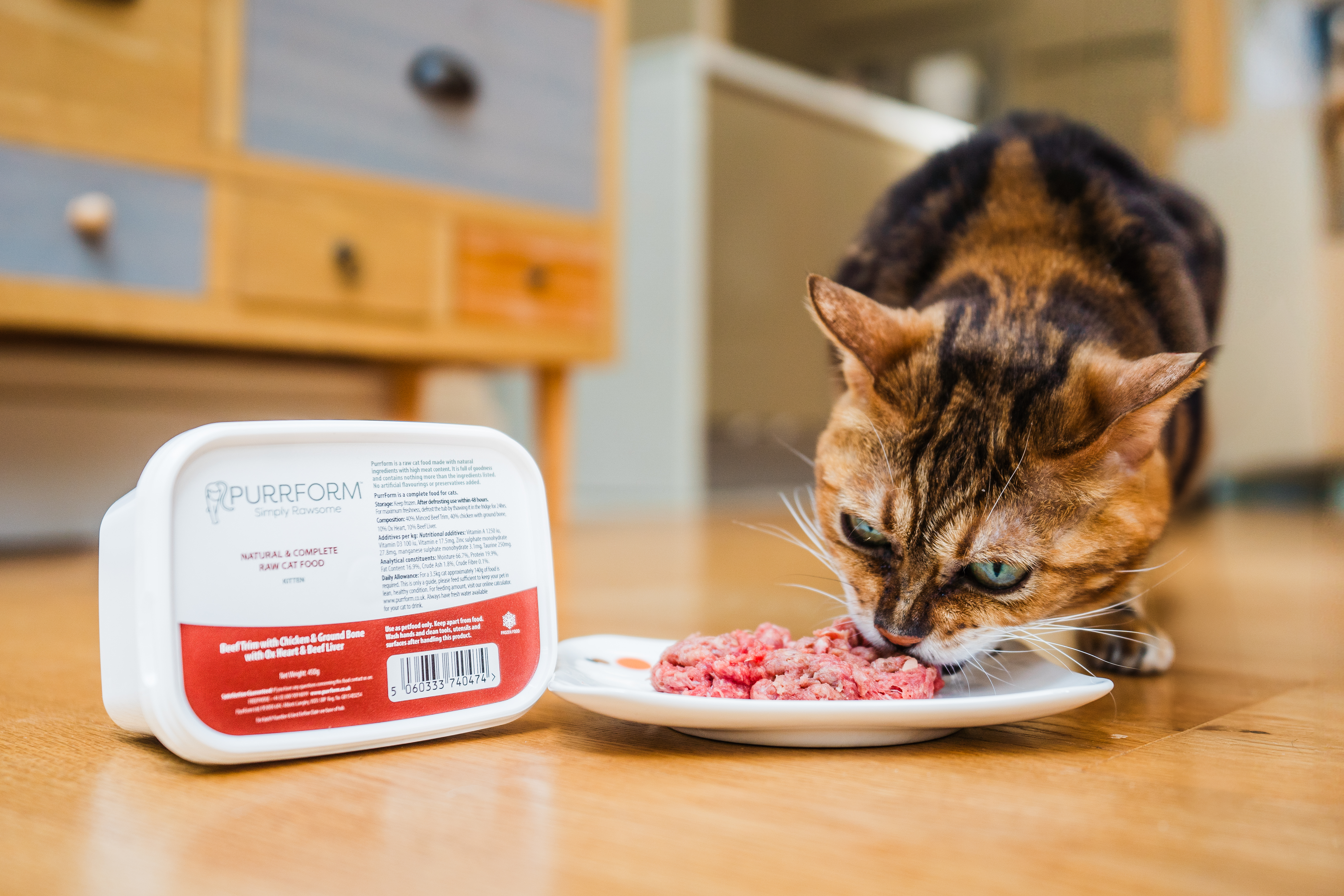
As veterinarians, it is our responsibility to remind guardians of a fundamental evolutionary truth: the domestic cat is an obligate carnivore. Its metabolism, dentition, and digestive physiology remain remarkably similar to those of its ancestor, the African wildcat (Felis lybica). In biological terms, the cat is still a hunter designed to process fresh animal prey.
For decades, the pet food industry has framed fresh diets as risky and nutritionally questionable, while positioning highly processed dry foods as the safest and most balanced option. However, when we examine the scientific evidence and the physiology of the feline digestive system, this narrative becomes far less convincing.
Extruded dry food is manufactured under extreme temperatures, typically between 120 and 150°C. While such temperatures effectively reduce microbial contamination, they also degrade heat-sensitive nutrients and promote the formation of pro-inflammatory compounds known as advanced glycation end products (AGEs) through the Maillard reaction. These compounds have been associated with oxidative stress and chronic inflammation in several species.
Moreover, once a bag of dry food is opened and exposed to oxygen, the risk of environmental contamination increases. The nutritional integrity lost during the manufacturing process, however, cannot be restored.
By contrast, emerging research suggests that the safety concerns surrounding raw diets may be significantly overstated. The DogRisk study, conducted by the University of Helsinki and involving more than 16,000 households over five years, found that with basic hygiene practices the risk of pathogen transmission from raw pet food to humans was extremely low.
If a cat were living outdoors and caught a bird or a small rodent, we would not question its biological capacity to process that food. That has been the species’ natural feeding behaviour for thousands of years. Today, the discussion is not about feeding scraps, but about precision nutrition aligned with feline physiology.
-
Digestive Efficiency and Colonic Health
The feline gastrointestinal tract is relatively short and highly specialised for the digestion of animal tissues. As a result, nutrient bioavailability in minimally processed diets is significantly higher than in heavily processed foods.
Studies comparing extruded diets with fresh or lightly cooked meat-based diets have shown notable differences in digestibility. While cats typically utilise around 80% of the protein present in dry foods, digestibility values for raw or gently cooked diets may reach 94–97%, reflecting the high biological value of animal proteins.
Another key factor is gastric acidity. Cats consuming fresh meat typically maintain a very low gastric pH, between 1 and 2. This acidic environment acts as a natural antimicrobial barrier while facilitating efficient enzymatic digestion.
This digestive efficiency has visible consequences in stool quality. Diets based primarily on animal tissues generate minimal indigestible residue, resulting in smaller, firmer stools with significantly reduced odour. By contrast, diets containing large amounts of plant-derived carbohydrates and fibres increase fermentation within the colon, often leading to larger stools and increased flatulence.
Fresh diets also appear to influence the composition of the gut microbiome. Research suggests that animals consuming minimally processed diets tend to harbour a more diverse microbial ecosystem. Although this area of research is still evolving, microbial diversity is increasingly recognised as an important indicator of gastrointestinal resilience and immune stability.
-
Skin Health, Coat Quality, and Chronic Disease
The skin is the largest organ in the feline body and may require up to 30% of the daily protein intake for proper maintenance and keratin production.
Fresh diets naturally provide essential fatty acids such as arachidonic acid and omega fatty acids, which play a crucial role in maintaining the integrity of the skin barrier. Guardians frequently report improvements in coat shine, texture, and reduced scaling after transitioning to minimally processed diets.
Clinical observations also suggest that animals suffering from chronic inflammatory conditions may benefit from diets that reduce exposure to highly processed ingredients and oxidised fats. Fresh diets often supply nutrients in forms that are more readily recognised and metabolised by the body, potentially lowering systemic inflammatory markers and supporting immune function.
-
Metabolism and Evolutionary Hydration
Cats evolved in arid environments where water availability was limited. As a result, they developed a physiology that relies heavily on metabolic water obtained from prey, which typically contains around 70–75% moisture.
Dry food, by contrast, contains roughly 10% water, forcing cats to rely on voluntary drinking to meet their hydration needs. However, cats possess a naturally low thirst drive, meaning that many individuals remain in a state of chronic mild dehydration when fed exclusively dry diets.
Over time, this can increase urinary concentration and place additional strain on the kidneys, potentially contributing to the development of urinary crystals and urolithiasis. Diets based on fresh or gently cooked foods naturally restore the biological moisture content that feline physiology evolved to process.
-
Historical Insights: The Pottenger Cat Study and Nutritional Epigenetics
One of the earliest long-term investigations into the relationship between diet and feline health was conducted by Dr Francis Pottenger between 1932 and 1942.
Over several generations, approximately 900 cats were observed while being fed different types of diets. Cats receiving raw meat and raw milk maintained robust health, normal skeletal development, and reproductive success across generations.
In contrast, cats fed cooked or highly processed diets developed progressive health problems, including inflammatory conditions, skeletal deformities, skin disorders, and declining fertility.
Although the methodology of this historical study would not meet modern experimental standards, its findings have often been revisited in discussions of nutritional epigenetics, the concept that dietary patterns may influence gene expression across generations.
-
Behaviour, Satiety, and the Importance of Chewing
Nutrition influences not only physical health but also neuroendocrine regulation and behaviour.
High-protein diets promote the release of Peptide YY (PYY), a hormone associated with satiety. Stable satiety signalling helps prevent rapid fluctuations in blood glucose and insulin, which may contribute to food-seeking behaviour and irritability.
Chewing also plays a significant behavioural role. Consuming pieces of meat or raw meaty bones stimulates the natural predatory sequence, engaging jaw muscles and sensory pathways associated with hunting behaviour.
This mechanical activity does more than support dental hygiene. It also stimulates the release of endorphins, contributing to emotional regulation and reducing stress. In behavioural terms, a cat that can express its natural feeding behaviour is often a more mentally balanced animal.
-
Balance and Variety in Fresh Diets
A fresh diet must also be properly balanced. This does not mean feeding only muscle meat. Cats require a combination of different animal tissues, including muscle meat, organs, appropriate supplements and some variety in ingredients to ensure all nutritional needs are covered.
For guardians who are new to this approach, the process does not need to be complicated or stressful. A nutritional consultation with a veterinarian experienced in fresh feeding can help design a balanced plan and guide the transition safely and confidently.
-
Food Safety: Freezing, Hygiene and Modern Technology
For guardians who have understandable concerns about food safety, modern technologies such as High Pressure Processing (HPP) can provide an additional level of reassurance. HPP inactivates many pathogens without the use of heat, helping to preserve much of the nutritional integrity of fresh food.
That said, for most households, proper freezing and careful kitchen hygiene are already sufficient precautions. Freezing meat at –20°C for at least one week significantly reduces the risk of parasites, and basic hygiene practices during food preparation further minimise potential contamination.
Food should be thawed in the refrigerator, bowls and preparation surfaces should be cleaned after each meal, and uneaten food exposed to room temperature for more than 30 minutes should be discarded.
Nothing in life is completely without risk. However, the feline body is well equipped to handle fresh animal tissue. The cat's strong gastric acidity and immune defences exist for a reason. Respect good food handling practices, trust the biological design of the animal, and choose high-quality ingredients.
Conclusion
In summary, the available evidence and the physiology of the cat both point in the same direction: foods that more closely resemble the natural composition of prey are better aligned with feline biology than heavily processed diets. Fresh or minimally processed foods provide nutrients in forms the feline body is adapted to digest, while also restoring the moisture content and feeding patterns that characterised the species throughout its evolutionary history.
When these diets are properly balanced and handled with appropriate hygiene, they offer a practical and biologically coherent way of feeding domestic cats. Rather than representing a trend, fresh feeding can be understood as a return to nutritional principles that respect the evolutionary design of the cat as a specialised carnivore.
References
- Cammack, N. R., et al. (2021). "Low Number of Owner-Reported Suspected Transmission of Foodborne Pathogens From Raw Meat-Based Diets Fed to Dogs and/or Cats". Frontiers in Veterinary Science.
- Davies, R. H., & Lawes, J. R. (2019). "Raw diets for dogs and cats: a review, with particular reference to microbiological hazards". Journal of Small Animal Practice.
- Geary, E. L., et al. (2025). "Standardized amino acid digestibility and nitrogen-corrected true metabolizable energy of frozen raw, freeze-dried raw, mildly cooked, and retorted dog foods using the precision-fed cecectomized and conventional rooster assays". Journal of Animal Science.
- Godfrey, H., et al. (2025). "Isoenergetic reduction of dietary macronutrients affects body composition, physical activity, and post-prandial hormone responses in lean and obese cats fed to maintain body weight". Frontiers in Veterinary Science.
- Golder, C., et al. (2020). "Cats Have Increased Protein Digestibility as Compared to Dogs and Improve Their Ability to Absorb Protein as Dietary Protein Intake Shifts from Animal to Plant Sources". Animals (Basel).
- Hamper, B. A., Kirk, C. A., & Bartges, J. W. (2016). "Apparent nutrient digestibility of two raw diets in domestic kittens". Journal of Feline Medicine and Surgery.
- Oba, P. M., et al. (2022). "Nutrient and Maillard reaction product concentrations of commercially available pet foods and treats". Journal of Animal Science.
- Sandri, M., et al. (2017). "Raw meat based diet influences faecal microbiome and end products of fermentation in healthy dogs". BMC Veterinary Research.
- Truth about Pet Food. "Nutrient Differences between Raw and Cooked Foods".
- Wernimont, S. M., et al. (2020). "The Effects of Nutrition on the Gastrointestinal Microbiome of Cats and Dogs: Impact on Health and Disease". Frontiers in Microbiology.