Can Cats Eat Raw Chicken
23rd Oct 2025
Yes, cats can eat raw chicken. In fact, it’s biologically appropriate for them. As obligate carnivores, their digestive systems are built to handle raw meat, including muscle meat, organs, and even raw bone.
But, while raw chicken can be a natural fit for their dietary needs, not all raw chicken is great; where you source them from, preparation, and balance, do matter.
This guide explains what makes raw chicken safe, what to avoid, and why professional raw feeding is the better choice.
Are Cats Meant to Eat Raw Chicken?
Yes. In the wild, cats hunt and consume raw prey, muscle meat, organs, and even bones. Domesticated cats may live indoors, but their biology hasn’t changed. Their teeth, digestive enzymes, and gut acidity are all adapted for breaking down raw animal tissue, including chicken.
Raw chicken cat food offers the kind of unprocessed animal protein, cats are built to thrive on. When fed as part of a balanced raw diet, it supports everything from muscle function to immune health, thanks to key nutrients like taurine, vitamin B6, and iron.
Benefits of Feeding Cats Raw Chicken
When handled and portioned correctly, raw chicken can be a valuable part of a cat’s diet
1. High-Quality Animal Protein
Raw chicken provides complete protein with essential amino acids like taurine and arginine, critical for heart function, vision, and immune health in obligate carnivores.
2. Rich in Vitamins and Minerals
Chicken is a natural source of vitamin B6, B12, niacin, phosphorus, and zinc. These nutrients support energy production, healthy nerve function, and metabolic balance.
3. Supports Digestive and Dental Health
Raw meat is easier for cats to digest than most cooked or processed foods. When bone is finely ground (as in Purrform’s Chicken & Ground Bone with Liver), it also provides natural calcium and helps maintain dental hygiene through gentle abrasion.
4. Helps Maintain Hydration
Raw chicken has a high moisture content, which can be beneficial for cats that don’t drink much water. This can support urinary tract health and reduce the risk of dehydration.
Is Raw Chicken Safe for Cats?
Feeding raw chicken can be safe for cats, but only when handled and prepared properly. Let’s look at the most common concerns and how to avoid them.
Bacterial Contamination (Salmonella, E. coli)
Raw chicken can carry bacteria, but cats are naturally better equipped to handle it. Their short digestive tract and highly acidic stomach environment limit how long pathogens can survive.
In most cases, cats exposed to Salmonella show no clinical signs at all. They may act as transient carriers without becoming ill.
When illness does occur, symptoms can include fever, lethargy, vomiting, diarrhoea, and abdominal pain. However, in clinical practice, it’s much more common to see these signs caused by stress, dietary indiscretion, or other infections, than by Salmonella. Moreover, in healthy, adult cats fed a balanced raw diet, confirmed clinical salmonellosis is virtually non-existent (Little, 2013).
Read more about;
Nutritional Imbalance from DIY Meals
Raw chicken breast alone is not a complete diet. It lacks the essential organs, bone content, and micronutrients that cats need to thrive. Feeding unbalanced meals can lead to taurine deficiency, stunted growth, or long-term organ stress.
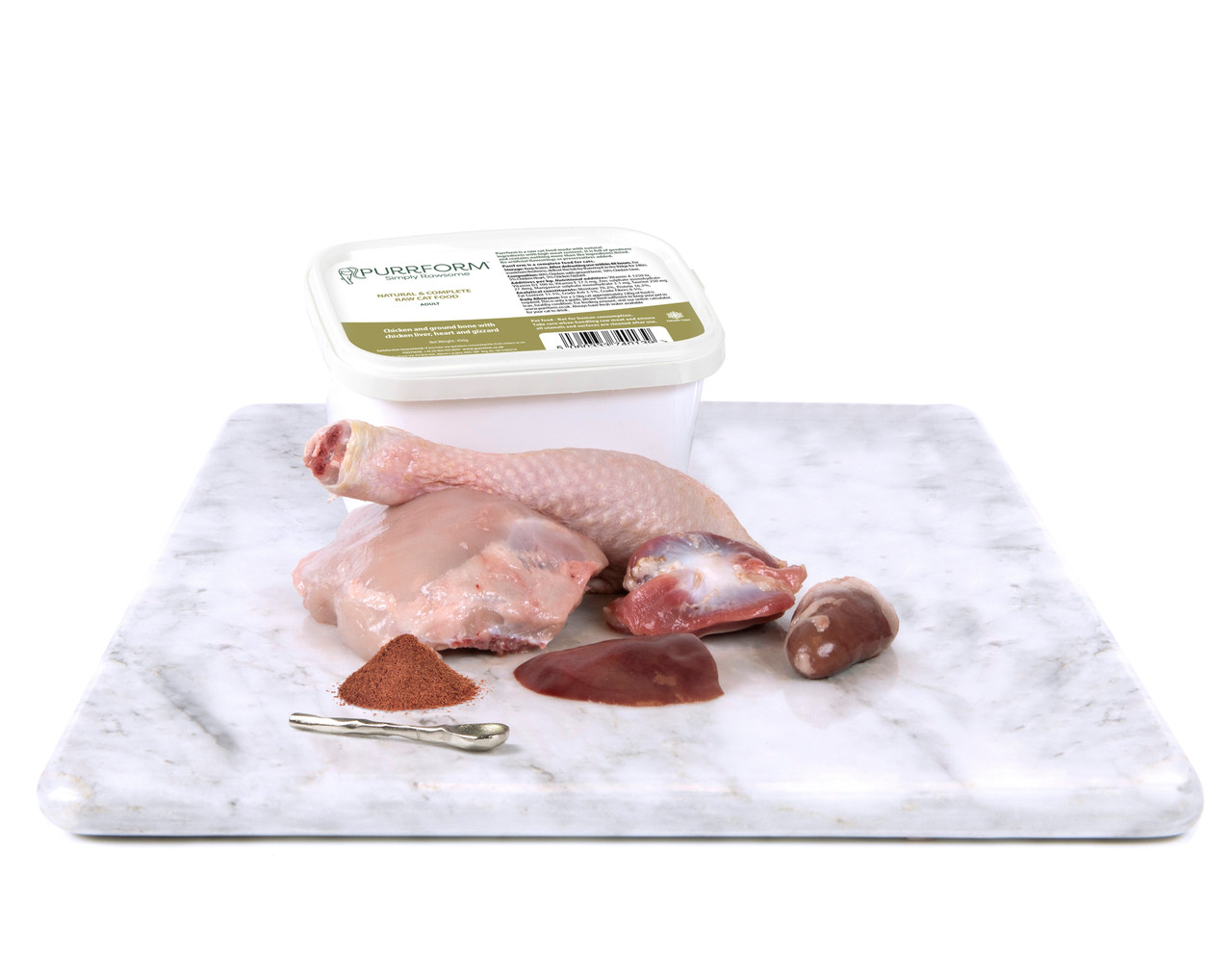
That’s why nutritionists and veterinarians carefully formulate Purrform raw meals. Each recipe, like our Chicken & Ground Bone with Liver or Chicken Breast with Heart, delivers the right ratio of muscle meat, organ meat, and bone, to meet your cat’s nutritional needs without guesswork.
Choking or Injury from Bones
Cooked bones are a major hazard. They become brittle and can splinter, causing choking, blockages, or internal injury. Raw chicken bones, on the other hand, are naturally softer and more digestible, but they still need to be prepared correctly.
Our recipes include finely ground raw bone for safe calcium intake, helping support strong bones and teeth without the risk. Every batch is precision-prepared to ensure consistency and safety.
Which Chicken Parts Are Safe – and Which to Avoid?
The safety and nutritional value of each part, depends on how it’s prepared and the balance it brings to your cat’s overall diet. Here’s what to include, and what to leave out.
Safe (In Professionally Prepared Meals)
- Raw Chicken Breast
A lean source of high-quality animal protein, chicken breast is ideal for building and maintaining muscle. However, on its own, it lacks essential fats, vitamins, and minerals, which is why it's only one part of a complete raw cat food. - Raw Chicken Liver
Liver is nutrient-dense and provides vital vitamins like A, B12, and iron. It supports immune health, red blood cell production, and detoxification. But it must be fed in moderation, too much can cause vitamin A toxicity. In Purrform raw cat meals, liver is portioned precisely for safe, balanced nutrition. - Raw Chicken Hearts
A rich source of taurine, chicken hearts are essential for heart health, vision, and overall function. They also contain B vitamins and iron, making them a valuable inclusion in a biologically appropriate raw meal. - Ground Bone
Raw ground bones supply calcium and phosphorus for healthy bones, joints, and teeth. Our finely ground bone blends, found in products like Chicken & Ground Bone with Heart or Liver, ensure improved digestion and safety with no splintering risk.
Avoid These
- Retail Chicken (Not Intended for Raw Feeding)
Raw chicken from retail shelves isn’t processed with raw feeding in mind. It may carry higher bacterial loads, suffer from poor handling practices, or lack the traceability and quality control used in commercial raw cat food. - Cooked Chicken Bones
Cooking makes bones brittle. Once swallowed, they can splinter and cause choking, puncture the digestive tract, or lead to internal injuries. Never feed cooked bones of any kind. - Unbalanced DIY Raw Diets
Feeding raw chicken without the right mix of organs, bones, and micronutrients can lead to serious health problems over time. Cats require precise nutrient ratios that DIY prep often lacks. - Spiced or Processed Chicken
Seasonings, marinades, salt, and additives can be toxic to cats or cause severe digestive upset. Even small amounts of cooked, seasoned chicken should be avoided unless it’s completely plain and unseasoned.
How Often Should Cats Eat Raw Chicken?
Raw chicken can be a regular part of your cat’s diet, especially when it’s fed as part of a complete raw food plan. At Purrform, our raw chicken meals are nutritionally balanced for daily feeding, meaning there’s no need to limit them unless your cat requires specific dietary variation.
That said, rotating proteins like beef, rabbit, and turkey alongside raw chicken can support nutritional variety and reduce the risk of sensitivities over time. A well-structured raw feeding plan should always account for your cat’s age, weight, and activity level.
If you’re feeding your cat raw chicken consistently, it’s crucial to use meals designed by pet nutritionists, not DIY mixes. Purrform’s complete raw chicken cat food products ensure the right balance of muscle meat, organ, and bone in every portion.
For personalised guidance, speak to your Nutritional Advisor or use our feeding calculator to determine the right daily amount based on your cat’s needs.
Why Professionally Prepared Raw Chicken Is the Best Choice
Professionally prepared raw cat food, like the meals we craft at Purrform, ensures every bite delivers the precise nutrition your cat needs.
Our formulations include the ideal proportions of muscle meat, organ meat, and ground chicken bones, carefully measured by feline nutritionists. This balance supports everything from energy levels and immune health to strong bones and healthy digestion.
Unlike the regular grocery meat or homemade blends, commercial raw cat food is prepared in hygienic, controlled environments to uphold food safety standards. There are no additives, fillers, or synthetic preservatives.
Meals like our Chicken & Ground Bone with Liver offer a complete raw feeding solution. It’s a biologically appropriate diet backed by science and designed to support everything from digestive health to dental hygiene.
If you want the benefits of raw cat food diets without the risks of nutritional gaps or unsafe preparation, professionally prepared raw meals are the safest, most effective choice.
We hope this has been useful and given you a bit of an insight into feeding your cats raw chicken, and will help you to keep your feline family member safe and free from any danger.