Can Cats Eat Raw Meat? What Is Safe and What Is Not
5th Nov 2026
If your cat has stolen raw chicken from the kitchen counter, or you are considering switching to a raw diet, the answer is more complicated than yes or no.
Cats can eat raw meat, and their bodies are adapted to a meat-based diet. However, raw meat can contain harmful bacteria, and ordinary meat from a butcher or supermarket does not provide every nutrient a cat needs.
The important distinction is between offering a small taste of raw meat, feeding ordinary raw meat as your cat's main diet, and choosing a complete raw food formulated specifically for cats. Each comes with different considerations.
Can cats eat raw meat, and should they?
Cats are obligate carnivores, meaning they depend on animal-derived nutrients to meet their nutritional needs. Wild cats eat prey, including muscle meat, organs, and bones, but this does not make domestic cats immune to foodborne bacteria.
A small piece of plain raw meat is different from a diet made entirely from raw chicken or beef. Both carry potential hygiene risks, but a diet of ordinary meat alone also risks nutritional deficiencies.
Meat sold for human consumption is generally intended to be cooked before eating. It should not automatically be considered suitable for feeding raw to pets.
Cats Protection advises against feeding cats raw meat intended for human cooking because of the potential for bacterial contamination. If you are considering raw feeding, speak to your vet about the risks and appropriate food choices.
What are the risks of feeding cats raw meat?
Raw meat can carry Salmonella
Salmonella is the most common cause for concern when it comes to raw feeding. While for humans, eating raw meat can make you extremely unwell, cats contracting salmonellosis is extremely rare. Dr Amaya Espíndola, MRCVS, is a veterinarian based in Mallorca whose work focuses on feline medicine and nutrition. She has written an article about Salmonella and raw feeding, pointing out that as cats are obligate carnivores, they’re equipped with highly acidic stomachs (pH ~1-2) and a short, efficient gastrointestinal tract designed to handle raw meat and the bacteria that come with it.
Plus, Purrform’s raw cat food range is made of only the highest grade human-quality meat, and is stored frozen to prevent the development of any harmful bacteria.
What raw meat can cats eat?
Different meats have different considerations, but choosing a particular type does not remove the risk of bacterial contamination or make it nutritionally complete.
- Chicken: Raw chicken can carry harmful bacteria. Plain, thoroughly cooked, boneless chicken is the more cautious choice for an occasional treat.
- Beef and mince: Raw beef can carry pathogens, while mincing can distribute surface contamination throughout the meat. Neither should form the entire diet without proper nutritional formulation.
- Pork and bacon: Raw pork can carry foodborne pathogens. Bacon is also processed and often high in salt, making it an unsuitable treat for cats.
- Fish: Raw fish carries hygiene risks, and some species contain thiaminase, an enzyme that breaks down vitamin B1. Regular exposure can contribute to deficiency.
- Liver: Liver contains valuable nutrients, but feeding too much can unbalance the diet and lead to excessive vitamin A intake over time.
- Bones: Raw bones can cause choking, dental damage, or injuries to the digestive tract. Cooked bones can splinter and are also unsuitable.
For an occasional treat, plain cooked meat without seasoning or bones is generally the more cautious option. Keep treats modest so they do not displace your cat's complete everyday food.
Is complete raw cat food different from supermarket meat?
Yes. Complete raw cat food is formulated to provide the nutrients a cat needs when fed according to its instructions. Ordinary muscle meat is not. Check the product label carefully. Food labelled complete is intended to meet a cat's nutritional needs when fed as directed. Food labelled complementary must be fed alongside other food as part of a balanced diet.
Even complete raw food carries hygiene considerations. Nutritional completeness does not mean a product is free from harmful bacteria. If you are considering raw feeding, speak to your vet about your cat's individual needs and whether this approach is appropriate.
How can you handle raw cat food more carefully?
Good hygiene reduces the risk of spreading harmful bacteria, although it cannot guarantee that raw food is free from contamination.
If you choose to feed raw food:
- Store it correctly: Follow the manufacturer's instructions for frozen storage and refrigeration.
- Thaw it carefully: Use the method specified on the packaging and keep raw food separate from food intended for people.
- Wash your hands: Use soap and water after handling raw food, packaging, or bowls.
- Clean and disinfect surfaces and utensils: Thoroughly clean and disinfect preparation areas, utensils, and bowls after use, following the cleaning product’s instructions.
- Wash bowls promptly: Remove food residue and clean bowls after meals.
- Keep food away from children: Prevent children from handling raw food, packaging, or feeding bowls.
- Follow the label: Do not guess how long food can be refrigerated, how long it takes to thaw or whether it can be refrozen.
Is cooked or raw meat better for cats?
Cats do not need to eat raw meat simply because they are carnivores. Both raw and cooked foods can meet their nutritional needs when properly formulated, but the food safety considerations differ.
Cooking can kill many harmful bacteria present in raw meat, making plain, thoroughly cooked meat the more cautious option for an occasional treat. It should be boneless, unseasoned and not used as a replacement for complete cat food.
Complete raw food is an option for owners who choose to feed raw, but it does not eliminate microbiological risks. Complete cooked food offers an alternative for owners who would rather avoid handling raw ingredients.
Raw feeding with Purrform
A complete commercially prepared raw food is a more practical starting point than trying to balance a diet using supermarket meat alone. Check the label, follow feeding instructions, and consult your vet before making a change.
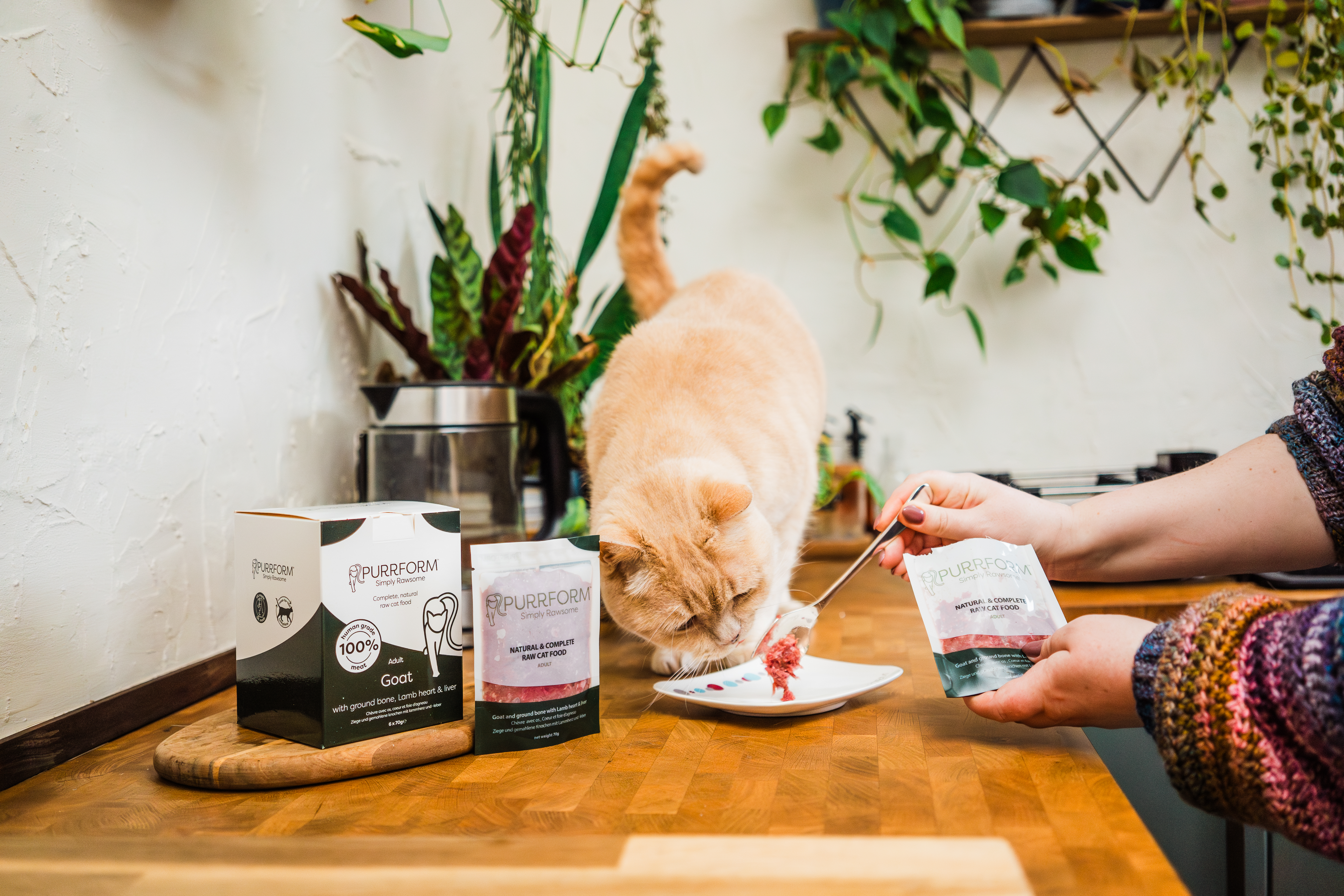
Purrform offers frozen raw foods in tubs and pouches, with individual product labels identifying whether each is complete or complementary. Its raw trial packs let owners explore the range before committing to regular orders. Choose a complete product if it is intended to provide your cat's whole diet.
If you prefer fresh food but feel uncomfortable feeding raw, Purrform's Fresh Deli range offers gently steamed, complete cat food in 70g pouches. Explore the Fresh Deli range to learn more.
For help introducing a new food, read our guide to transitioning your cat, or visit our FAQs for further feeding advice.
Helpful Resources