Cats and Carbohydrates: The Hidden Truth in Your Feline’s Bowl
Posted by Dr. Amaya Espíndola, MRCVS on 27th May 2026
Dr. Amaya Espíndola, MRCVS is a holistic, cat and nutrition specialist, veterinarian based in Mallorca and the current president of the Raw Feeding Veterinary Society. She offers online consultations worldwide, focusing on nutrition as the first line of therapy. With a background in psychosomatic medicine, Amaya approaches each case by considering the deep connection between physical symptoms and emotional wellbeing, aiming to support feline health from a truly integrative perspective. You can find her at felvet.co.uk and on Instagram at @felvetforcats
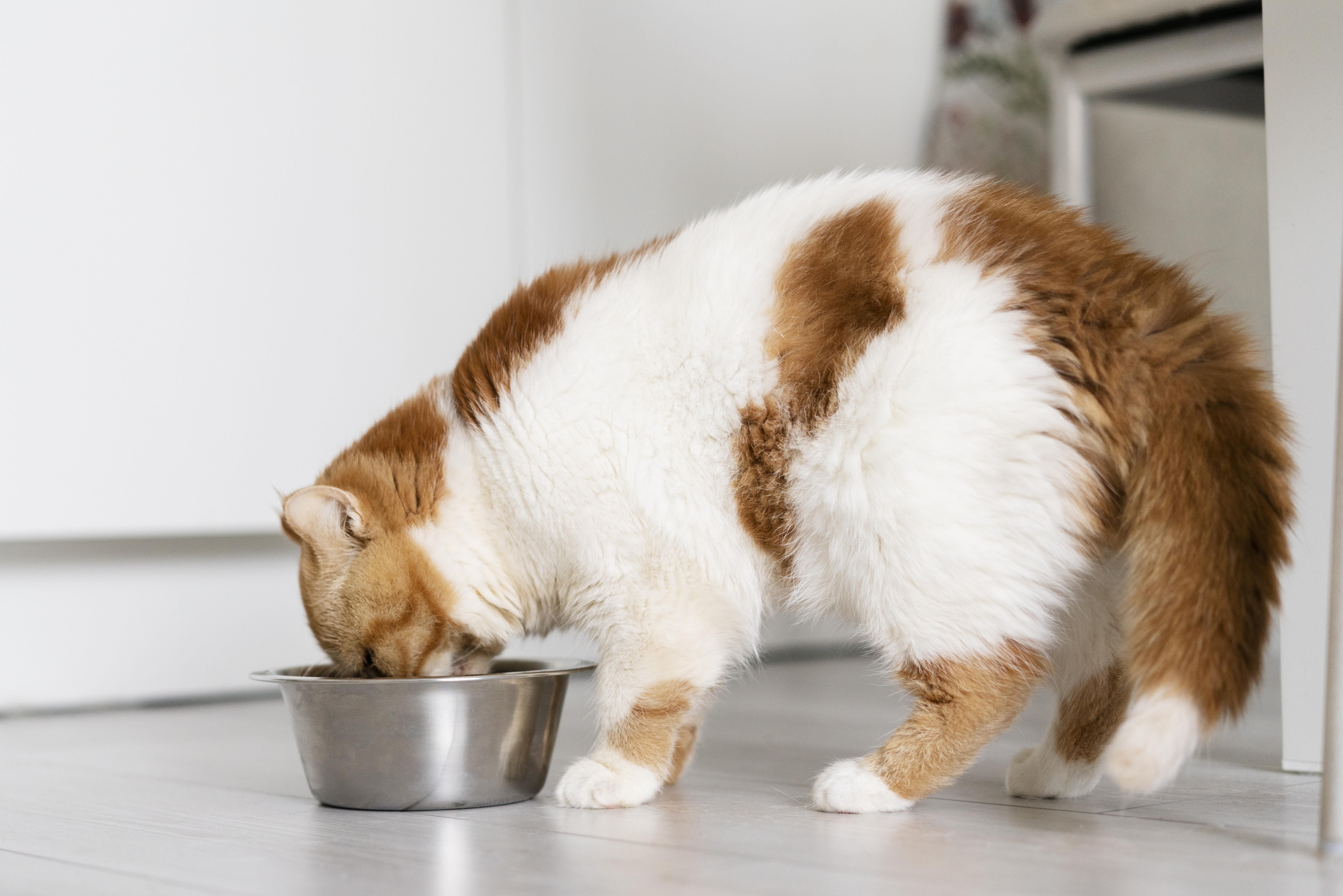
Discover how the biology of strict carnivores clashes with the ultra-processed food industry, and what you can do to protect your companion's physical and mental health.
-
Carnivores by Nature: How They (Do Not) Process Carbohydrates
To truly understand feline nutrition, we must first look at the evolutionary history of the domestic cat. Cats are desert-dwelling creatures by origin, an environment where standing water is scarce. Consequently, they evolved to obtain up to 70% of their daily hydration directly from the moisture-rich tissues of their prey. More importantly, cats are classified as strict, or obligate, carnivores. If left to their own devices in the wild, free-roaming felines naturally select a diet consisting almost entirely of animal protein and fat, with carbohydrates making up an insignificant fraction of their intake.
Unlike omnivores, such as humans and dogs, cats are not biologically equipped to utilise carbohydrates as a primary energy source. Their anatomical and enzymatic limitations are profound. For instance, cats completely lack salivary amylase, the enzyme responsible for initiating the breakdown of starches in the mouth, and they produce remarkably low levels of pancreatic amylase. Furthermore, as discussed previously, cats possess a deficient functioning of the hepatic enzyme glucokinase, drastically limiting their liver's ability to oxidise glucose efficiently.
Because of these biological constraints, cats rely on a metabolic process called gluconeogenesis to generate their energy. Rather than metabolising the sugars found in carbohydrates, cats continuously break down the amino acids found in animal proteins to synthesise the glucose their bodies need. A recent study investigating the macronutrient metabolism of cats acutely fed single-ingredient meals starkly highlighted this limitation.
When cats were fed a meal consisting purely of cornstarch, they exhibited the lowest energy expenditure compared to when they were fed protein or fat. Astonishingly, the cats consuming the carbohydrate diet consistently excreted white faeces, a clear physiological indicator that they were unable to properly digest or absorb the starches provided. When we force a feline body to process high levels of carbohydrates, we are asking it to perform a task it was never designed to do, forcing the body to make a metabolic overexertion.
-
The Myth of "Nutrients over Ingredients": The Resistant Starch Trap
A common narrative promoted by the processed pet food industry is that "we must focus on nutrients, not ingredients". This phrase is frequently utilised to lend a veneer of scientific authority to commercial diets, conveniently justifying the heavy use of cheap cereals, grains, and starches in feline kibble. While it is true that specific nutrients are essential, isolating them from their natural biological matrix can be highly misleading.
A prime example of this is the recent focus on dietary resistant starch. Resistant starch is a type of carbohydrate that escapes digestion in the small intestine and reaches the colon, where it acts as a soluble fibre. A study evaluating resistant starch preserved through the mild extrusion of grains found that it provided measurable prebiotic benefits to the feline microbiome. The cats consuming this high resistant starch food experienced positive shifts in gut bacteria, leading to a significant increase in the production of beneficial short-chain fatty acids, specifically butyrate, and elevated levels of Immunoglobulin A (IgA), which supports mucosal immunity.
However, there is a significant catch to these findings that is often obscured by marketing. The commercial diets used to demonstrate these benefits contained a Nitrogen-Free Extract (NFE)—which represents the digestible carbohydrate fraction—of roughly 33% to 34%. While a small amount of resistant starch undoubtedly acts as a beneficial prebiotic fibre, using this isolated physiological benefit to justify a diet where over 30% of the baseline composition consists of carbohydrates is a fundamental contradiction. A strict carnivore does not need a diet composed of one-third carbohydrates just to obtain a small fraction of soluble fibre. Claiming that "nutrients matter more than ingredients" in this context ignores the catastrophic systemic effects that such a massive carbohydrate load places on the feline metabolism.
-
A Recipe for Disease: Obesity, Inflammation, and the Pottenger Study
The consequences of forcing a strict carnivore to consume an inappropriate, carbohydrate-heavy diet are severe and undeniable. The excessive consumption of starch and carbohydrates directly provokes an increase in body fat. Today, the veterinary community is battling a global epidemic of pet obesity, a condition that is no longer viewed merely as an excess of weight, but as a state of chronic, low-grade inflammation. This unnatural, ultra-processed diet is directly correlated with the alarming rise of modern feline diseases, including obesity, Diabetes Mellitus, devastating urinary tract diseases (urolithiasis), and even cancer.
To understand how sensitive cats are to alterations in their natural diet, we must look back at the historical nutritional experiments conducted by Dr. Francis M. Pottenger Jr. between 1932 and 1942. In a decade-long study involving over 900 cats across four generations, Dr. Pottenger compared the health of cats fed a natural raw meat and raw milk diet against those fed cooked meat and pasteurised milk. The results were staggering. The cats fed the cooked diet developed severe structural deformities, cardiac lesions, blindness, higher incidences of stillbirths, and an exceedingly high infant mortality rate.
At the time, the exact mechanism was unknown, but modern science has since provided the answer. The intense heat of cooking destroyed heat-labile amino acids, most notably taurine, which is absolutely essential for feline survival. Current research confirms that a taurine deficiency is the direct cause of the developmental abnormalities, retinal degeneration, and myocardial failures observed in Pottenger's cats. While modern commercial diets now artificially add synthetic taurine back into their heavily cooked mixtures to prevent these specific acute failures, the Pottenger study remains a powerful cautionary tale. It demonstrates exactly how vulnerable the feline body is when we stray from its biological blueprint, and it highlights the hidden dangers of relying on highly processed, altered food sources.
-
Behaviour and Stress: Is Kibble Affecting Your Cat's Mind?
The impact of an inappropriate diet extends far beyond physical ailments; it deeply affects the feline nervous system and behaviour. The consumption of ultra-processed, carbohydrate-dense foods generates a profound level of physiological stress within the cat's body. Furthermore, cats are creatures of habit, and failing to provide a consistent routine in their feeding and daily life only exacerbates their anxiety.
Historically, the link between unnatural diets and mental distress was clearly documented. In the aforementioned Pottenger studies, the cats suffering from nutritional deficiencies due to the altered, cooked diets did not just experience physical degeneration; they were also reported to develop a noticeably more "nervous disposition" compared to their healthy, naturally fed counterparts.
Today, the pet food industry tacitly acknowledges the stress and anxiety prevalent in modern cats by incorporating therapeutic, behaviour-modifying additives into veterinary diets. For instance, supplements such as tryptophan (an amino acid precursor to serotonin) and alpha-casozepine (a hydrolysed peptide derived from bovine milk with proven benzodiazepine-like, anxiolytic activity) are increasingly used to clinically manage felines exhibiting anxiety in socially stressful conditions. While these compounds have a validated calming effect, their necessity raises an important question. By feeding cats an evolutionarily inappropriate diet that forces their metabolism into a state of chronic stress, we are creating a cycle of anxiety and disease, only to then treat the symptoms with added synthetic calming agents. A biologically appropriate diet, coupled with feeding routines that stimulate mental activity and hunting instincts, is a far more coherent path to a balanced and stress-free feline.
-
Quality and Ingredients Do Matter: The Challenge of Mimicking Nature
When evaluating cat food, the quality and origin of the ingredients matter immensely. In the wild, a cat’s natural prey provides a highly specific macronutrient profile: roughly 50-70% protein, 30-50% fat, and a negligible 1-2% carbohydrate content. Nature has already perfected the feline diet.
The inherent problem with the modern pet food industry is the attempt to artificially reconstruct this complex biological matrix in a laboratory. We can formulate an ultra-processed kibble that, on paper, meets all the minimum synthetic nutrient requirements outlined by nutritional guidelines. However, a spreadsheet of isolated nutrients does not equate to biological availability or physiological harmony. The feline digestive tract is a highly specialised system. If a diet lacks high-quality animal protein, or if it relies on carbohydrates to form the bulk of the kibble, the cat's body will struggle to process it efficiently, regardless of how many synthetic vitamins are sprayed onto the final product.
Moreover, cats are notoriously selective eaters, a trait that stems directly from their specialisation as hypercarnivores. A diet might be theoretically "perfect," but if it lacks the natural palatability of real animal fat and protein, a cat will reject it. The industry circumvents this by coating carbohydrate-heavy kibble in artificial digests and animal fat to trick the cat's senses into consuming something it would otherwise ignore. Ultimately, we must recognise that we are still far from successfully imitating the perfection of nature in a laboratory, especially when it comes to the strict requirements of the cat.
-
Conclusion: Respecting Feline Biology for a Long and Healthy Life
Inviting a cat into our homes is a conscious choice and a profound ethical commitment. They depend entirely on us for their well-being, and they do not have the autonomy to choose a healthier path if we fill their bowls with inappropriate foods. We must stop treating cats out of convenience, treating them as if they were omnivorous humans or small dogs.
The evidence is clear: while isolated compounds like resistant starch may offer minor prebiotic benefits, they do not justify feeding a strict carnivore a diet heavily laden with carbohydrates. Doing so ignores their most basic physiological needs and predisposes them to a lifetime of chronic inflammation, obesity, and metabolic disease. The most coherent, scientifically sound, and ethical approach to feline nutrition is to feed them the way nature intended. By choosing a diet based firmly on high-quality animal proteins and fats, and by leaving carbohydrates out of the equation entirely, we can protect our felines' physical and mental health, ensuring they live long, vibrant, and biologically fulfilled lives.
Amaya Espindola, MRCVS - felvet.co.uk
REFERENCES:
- Jackson, M. I., Waldy, C., & Jewell, D. E. (2020). Dietary resistant starch preserved through mild extrusion of grain alters fecal microbiome metabolism of dietary macronutrients while increasing immunoglobulin A in the cat. PLoS ONE, 15(11), e0241037. (Utilizado para la sección del almidón resistente, la producción de butirato, el aumento de Inmunoglobulina A y el contenido de extracto libre de nitrógeno del 33-34% en dietas comerciales).
- Jantzi, S. A. M., Anan, S. F., Brewer, J., et al. (2026). Macronutrient and energy metabolism changes in domestic cats when fed cornstarch, whey protein, and, poultry fat. British Journal of Nutrition, 135(3), 241-249. (Utilizado para explicar cómo forzar el metabolismo con almidón de maíz puro resulta en el menor gasto energético y produce heces blancas en los gatos, evidenciando su incapacidad para procesarlo).
- Zoran, D. L. (2002). The carnivore connection to nutrition in cats. Journal of the American Veterinary Medical Association, 221(11), 1559-1567. (Referencia clave sobre la fisiología del gato como carnívoro estricto y su metabolismo único).
- Emlet, J. (2013). A Reexamination of Pottenger's Cats. Master of Science Thesis, Logan University. (Documento que reexamina el histórico estudio del Dr. Francis M. Pottenger Jr., conectando el impacto de las dietas alteradas por el calor y la deficiencia de taurina con las deformidades estructurales, problemas cardíacos, alta tasa de mortalidad infantil y disposición nerviosa).
- Verbrugghe, A. (n.d.). Mitigating Feline Obesity - Where Are We? Real Science Lecture Series, Balchem / Ontario Veterinary College. (Fuente utilizada para la sección sobre la epidemia de obesidad felina, definiéndola como un estado de inflamación crónica de bajo grado derivado de un exceso de energía/carbohidratos).
- Brady, M. (2014). Feline Urethral Obstruction: New Options, New Solutions to an Old Problem. American Association of Feline Practitioners (AAFP) 2014 Conference Proceedings. (Proporciona la base científica sobre el uso clínico de aditivos nutricionales como el Triptófano y la $\alpha$-casozepina para modular el estrés, la ansiedad y las conductas tensas generadas en el felino moderno).
- Espindola, A. (2025). Gatos y Carbohidratos – Una Catástrofe Moderna. Raw Feeding Veterinary Society. (Referencia para el análisis crítico de la justificación de la industria de "enfocarse en los nutrientes, no en los ingredientes" y las enfermedades modernas).