The Silent Burden: How Everyday Life at Home Shapes Your Cat's Emotional World
Posted by Dr. Amaya Espindola, MRCVS. Director of Felvet Limited on 14th Sep 2026
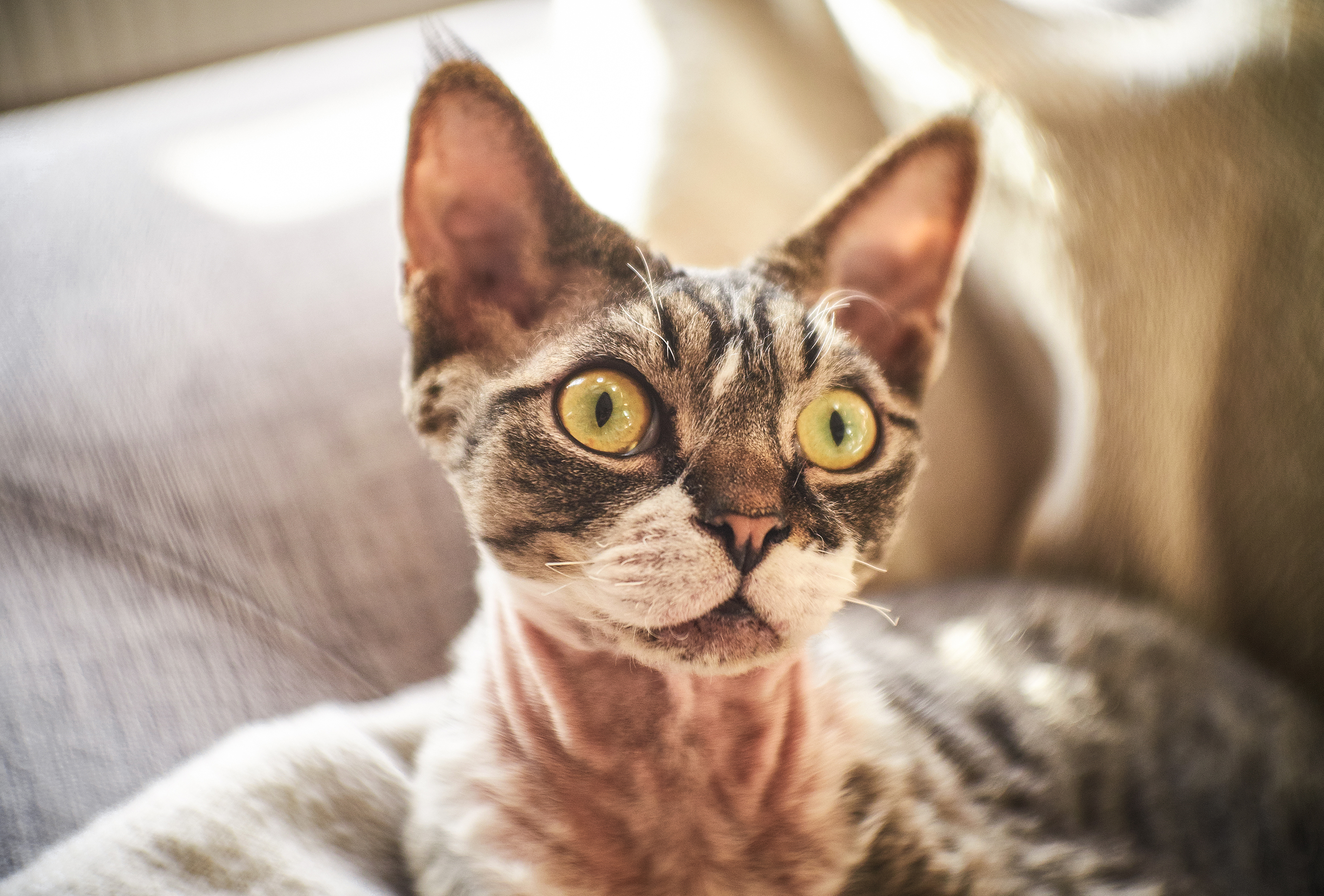
For generations, we've been sold a convenient idea about cats: that they're independent, self-sufficient, and emotionally distant. Since a cat doesn't wag its tail or bark like a dog, we assume its inner life needs very little from us. Under that assumption, our homes have quietly normalized all sorts of physical and behavioral distress signals. That sudden swat mid-cuddle gets written off as "just being moody." Weekly vomiting gets blamed on "cats and their grooming." Avoiding the litter box, hiding away, or scratching the couch gets read as spite or disobedience.
The biology of the feline mind tells a very different story. Cats aren't indifferent little ornaments that happen to share our couch — they're sensitive, finely tuned mammals whose emotional wiring runs through brain structures as old as the species itself. When their most basic emotional needs collide with artificial routines, closed-off spaces, and the small pressures of human life, their bodies and behavior absorb that impact.
How the Feline Mind Is Built: Solo Hunter and Close Companion
To understand feline distress, we first need to understand how evolution built the cat's brain. All mammals share the same basic emotional networks, tucked deep inside the brain. Cats feel fear, anger, separation distress, curiosity, and the urge to play — not as "human ideas" we project onto them, but as real neurochemical events that guide their survival.
The domestic cat descends from the African wildcat (Felis lybica), a hunter that works alone. Unlike pack predators that chase big prey as a team, a cat has to catch small, elusive prey entirely on its own. And because of its small size, it sits in an in-between spot on the food chain: it hunts, but it can also be hunted by bigger predators.
That double reality means predictability and control over its environment aren't a luxury — they're a biological necessity. A solo hunter can't afford surprises. Every corner, every scent, every high perch, and every escape route gets carefully mapped in the cat's mind.
At the same time, the feline nervous system runs on a strong exploratory, seeking drive. In the wild, hunting means patrolling, tracking new scents, waiting in stillness, then bursting into short explosions of movement. The act of searching and anticipating is rewarding to a cat's brain in itself. When we lock this specialized hunter into an apartment where nothing ever changes and food always shows up in the same bowl, that seeking drive stalls out. Feline boredom isn't calm — it's a chronic state of emotional frustration.
In our homes, cats aren't looking for a "pack leader." What they're after is companionship: they watch our hands, track our movements, ask for attention with soft meows and long looks, and seek out a sense of safety near us. But because their language is so quiet, their emotional strain usually goes unnoticed until their body starts to break down.
Busting the Everyday Myths About Cat Behavior
Because human households so often misread feline biology, we end up mistaking normal boundaries for personality flaws, and genuine suffering for mere quirkiness.
The Myth of Total Independence
The idea that cats don't care whether their person is around has caused real harm. Cats form deep social bonds with the people who care for them. When we travel, suddenly shift our schedules, or disrupt household routines, a cat's separation-distress circuits switch on. It rarely looks like desperate crying at the door; more often it shows up as withdrawal, loss of appetite, persistent meowing, or urinating right on their caregiver's bed or clothes. That's not revenge. It's a scared animal's instinctive attempt to blend its scent with its attachment figure's, trying to feel safe again.
The Swat We Don't Understand: Sensory Overload
The cat climbs into your lap, purrs, leans into the first few strokes — and then suddenly bites or swats the hand petting it. Almost every human reads this as betrayal or a random mood swing. Biologically, it's something else entirely: a sensory limit that's just been crossed. Cat skin is thin and packed with nerve endings and touch receptors. Short, gentle touches around the cheeks and chin mimic the natural greeting cats give each other, but long, repetitive strokes down the back or sides tip into sensory overload fast. The feeling flips from pleasant to irritating — or outright painful — in seconds. In almost every case, the cat gives a warning first: the tip of the tail flicks, the ears shift, the pupils dilate, the body tenses. When we ignore those "that's enough" signals because we want to keep enjoying the petting, the cat is left with only one tool to create distance.
When Frequent Vomiting Becomes "Normal"
Many caregivers have come to accept that their cat throws up often as just part of having a cat. It shouldn't be. Occasionally passing a compact hairball is one thing, but frequent vomiting or regurgitation is a real clinical red flag. A cat's digestive system is deeply wired into its emotional brain. When stress and friction with the environment rise, nervous system signals disrupt normal gut contractions, change digestive secretions, and trigger inflammation in the gut lining — directly causing nausea and vomiting.
The Mind-Body Connection: How Stress Becomes Physical Illness
A cat's emotions and its physical health are connected — they're not two separate things. When a cat lives with constant fear, anxiety about its territory, or feels like it has no control over what happens around it, its body goes into "stress mode," the same way ours does.
When that stress mode stays switched on for too long, the body keeps pumping out stress hormones nonstop. Instead of helping the cat, this constant flood of hormones ends up hurting it: it narrows blood vessels, causes inflammation, and slowly wears down different organs.
The Bladder as an Emotional Mirror
The clearest example of this is Feline Idiopathic Cystitis (FIC) — the most common cause of urinary problems in cats under ten. Cats with FIC strain to pee, have blood in their urine, and try to go outside the litter box again and again. But when vets run tests, they usually find no infection, no stones, nothing physically "broken."
That's because FIC is now understood as part of a stress-related condition called Pandora Syndrome. These cats have a nervous system that overreacts to things like a strange cat outside the window, loud construction noise, or a dirty litter box. That overreaction floods the body with stress hormones, which reduce blood flow to the bladder and irritate its lining. The result: a bladder that's genuinely inflamed and painful — even though the real trigger was stress, not an infection.
The Gut-Brain Connection
A cat's gut and brain are in constant communication — what happens in one affects the other.
When a cat is stressed for a long time, blood flow shifts away from the intestines. This weakens the gut, lets irritating substances leak into the body, and throws off the balance of good bacteria that normally help keep the cat calm. This creates a loop: an upset gut makes the cat more anxious, and more anxiety upsets the gut further — leading to ongoing diarrhea, sudden refusal to eat, or long-term digestive disease.
Compulsive Overgrooming
Grooming is normal — cats spend a huge chunk of their day doing it, and licking even releases feel-good chemicals in the brain. But when a cat is bored, stressed, or doesn't feel safe in its space, grooming can turn into a way of coping with that stress. Over time, this can become compulsive: the cat licks the same spot over and over until the fur is gone and the skin underneath is raw. This condition is called psychogenic alopecia.
The Human Footprint: A Predictable Environment and Personal Space
Because cats are still biologically tied to their wild instincts, their emotional health is directly linked to the physical layout of the home and how we treat them. Homes are designed for human convenience, and what looks like a small change to us can be deeply disorienting for a cat.
To feel secure, a cat needs an environment that respects its natural needs: quiet hiding spots where it can rest undisturbed, elevated walkways and perches to watch its surroundings from a safe vantage point, and multiple, well-spaced-out stations for food, fresh water, and a clean litter box. It also needs its own spots to scratch, care for its claws, and leave visual and scent marks that confirm its territory is secure.
When we move furniture around, repaint the walls, or wipe down doorframes with strong-smelling cleaners, we accidentally erase the invisible map of facial pheromones that tells the cat "you're safe here." To us, the room just got clean; to the cat, its most important safety landmarks vanished, leaving it in a space that suddenly feels foreign and unsafe.
In the same way, forcing multiple unrelated cats to share a closed-off home without enough resources spread around creates constant, silent tension. Two cats don't need to hiss or fight to be living in deep hostility. One cat simply sitting still in a hallway or a doorway can quietly cut off the other's access to food, water, or the litter box, trapping it in silent, ongoing fear.
Finally, how we handle cats matters enormously. When we pick them up without warning, hold them against their will, squeeze them into tight hugs, or scold them for natural marking behavior, we're violating their most basic need for autonomy. For an animal that relies on agility, control over space, and a quick way out to feel safe, physical restraint immediately triggers its fear and defense circuits.
The domestic cat is neither an unfeeling machine nor an indifferent roommate. It's a sensitive, observant companion whose health, digestion, and behavior act as a fairly accurate gauge of how emotionally safe its home really is. Letting go of the comfortable myth of feline independence is the first and most important step toward truly understanding who our cats are.
References & Foundational Science
- Panksepp, J. Affective Neuroscience: The Foundations of Human and Animal Emotions. Oxford University Press.
- Marchesini, R. La scienza del gatto: Cosa sappiamo dei nostri amici felini. Giunti Editore.
- Marchesini, R. The Creative Animal: How Every Animal Builds its Own Existence. Palgrave Macmillan.
- Dehasse, J. Tout sur la psychologie du chat. Éditions Odile Jacob.
- Ellis, S. L. H., et al. AAFP and ISFM Feline Environmental Needs Guidelines. Journal of Feline Medicine and Surgery, 15(3), 219–230.
- Yang, K., et al. Dietary regulation strategies and stress-related gastrointestinal and systemic alterations in companion animals. Antioxidants, 12(3), 545.
- Buffington, C. A. T., et al. Clinical evaluation of multimodal environmental modification (MEMO) in the management of cats with idiopathic cystitis. Journal of Feline Medicine and Surgery, 8(4), 261–268.
- Landsberg, G., et al. Therapeutic effects of an alpha-casozepine and L-tryptophan supplemented diet on fear and anxiety in the cat. Journal of Feline Medicine and Surgery, 19(6), 594–602.