Joint Health and Pain in Senior Cats: When Every Step Becomes a Battle
Posted by Dr. Amaya Espíndola, MRCVS on 16th Apr 2026
Dr. Amaya Espíndola, MRCVS is a holistic, cat and nutrition specialist, veterinarian based in Mallorca and the current president of the Raw Feeding Veterinary Society. She offers online consultations worldwide, focusing on nutrition as the first line of therapy. With a background in psychosomatic medicine, Amaya approaches each case by considering the deep connection between physical symptoms and emotional wellbeing, aiming to support feline health from a truly integrative perspective. You can find her at felvet.co.uk and on Instagram at @felvetforcats.
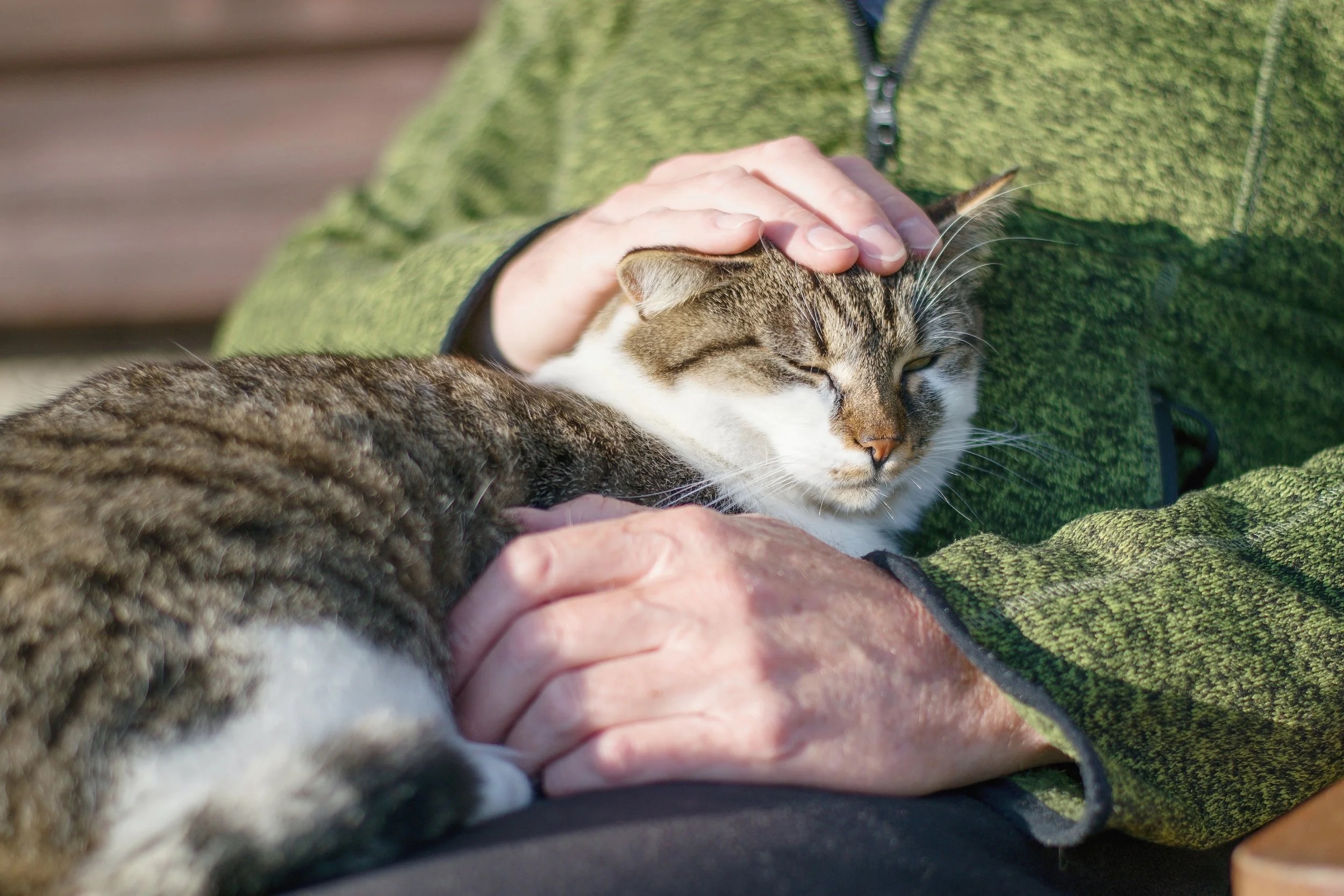
It is a common and dangerous misconception that "slowing down" is merely a natural consequence of feline ageing. In reality, cats are evolutionary masters of disguising discomfort — in the wild, showing pain is a liability. Consequently, what a guardian perceives as "laziness" or "getting old" is often a silent struggle with chronic pain. The statistics are sobering: clinical studies and radiographic surveys suggest that between 60% and 90% of all cats suffer from some form of Degenerative Joint Disease (DJD). This is not a niche issue; it is a feline health crisis that remains largely underdiagnosed.
While Osteoarthritis (OA) — the progressive degradation of joint cartilage — is the most common culprit, other conditions such as hip dysplasia (notoriously prevalent in breeds like the Maine Coon), luxating patellas, and spinal spondylosis also contribute to this debilitating landscape. Understanding that your cat is very likely living with some level of joint inflammation is the first step toward reclaiming their quality of life.
The Biological "Rust": Understanding Why Joints Fail from the Inside Out
To manage joint disease effectively, we must look beyond the surface. A healthy joint is a marvel of biological engineering, where smooth articular cartilage acts as a frictionless shock absorber, allowing effortless movement. In a diseased state, this elegantly balanced system fails through a complex chemical and mechanical collapse.
When cartilage sustains micro-damage, it releases fragments into the joint capsule. The body does not interpret this as simple "wear and tear" — it reads it as an invasion. This triggers an inflammatory cascade in which enzymes, essentially biological "scissors," begin digesting the cartilage matrix from within.
This is not passive deterioration; it is a persistent chemical fire. As the cushioning thins, the underlying bone is exposed to abnormal pressure, driving the growth of jagged bone spurs (osteophytes) and a progressive thickening of the bone itself. Every step becomes a source of friction and heat, eventually pushing the nervous system into a state of hypersensitisation — where pain is recorded even from the lightest touch or the gentlest movement.
Diagnosing the Invisible: A Rigorous Approach That Goes Beyond a Routine Check-Up
Diagnosing joint pain in a cat is a significant clinical undertaking. It is never "just a quick look." Because cats frequently experience what we call stress-induced analgesia at the vet — a surge of adrenaline that temporarily masks their pain — the diagnostic process must be deliberately multifaceted.
The Guardian's Role:
You are, without question, the most important diagnostic tool available. Using validated questionnaires such as the FMPI (Feline Musculoskeletal Pain Index) or CSOM, we translate your cat's daily habits into actionable clinical data. Does your cat hesitate before jumping? Do they descend stairs with a "bunny hop"? Is their coat matted in places they can no longer twist to groom? These details are not trivial observations — they are clinical signals.
Other pain scales for use in cats with chronic pain: https://wsava.org/wp-content/uploads/2020/01/Chronic-Pain_Cats.pdf
Clinical Examination:
A thorough veterinary review involves carefully palpating for muscle thinning (atrophy). Cats are experts at subtly shifting their weight forward onto their front legs to spare a painful hip, leading to gradual but measurable wasting of the thigh muscles that a trained hand will detect.
Imaging and Laboratory Work:
Radiographs are essential to visualise structural damage, but they must always be paired with full blood panels and urinalysis. We need to evaluate kidney and liver function — not only to rule out concurrent disease, but because many conventional treatments can be genuinely devastating if these organs are already under strain.
Nutrition: The True Foundation of Treatment, Not an Afterthought
The most vital takeaway for any guardian is this: nutrition is not merely a support measure — it is the foundation of treatment itself. In clinical practice, we find that a significant portion of the supplements currently flooding the market could be rendered entirely unnecessary if the cat were provided with a biologically appropriate, high-quality diet from the start.
The Protein Myth and the Role of L-Carnitine
For years, senior cats were wrongly transitioned to low-protein diets under the mistaken belief that this protected their kidneys. We now know that high-quality, highly bioavailable animal protein is essential to prevent sarcopenia — the progressive loss of muscle mass associated with ageing and chronic pain. Without strong, well-developed muscles to stabilise the joint, bone-on-bone friction accelerates, creating a devastating and self-reinforcing mechanical cycle.
In this context, L-carnitine — an amino acid derivative naturally found in high-quality animal tissues — plays a starring role. L-carnitine is essential for fatty acid metabolism; it acts as a biological "shuttle," transporting fats into the mitochondria (the cell's power plants) where they are burned for energy. For a senior cat with osteoarthritis, L-carnitine serves a dual purpose: it helps maintain lean muscle mass, ensuring the joints retain the structural support they depend on, and it promotes the efficient use of fat for fuel, making it considerably easier for a cat with limited mobility to maintain a healthy body weight without losing muscle in the process.
Furthermore, low-quality, ultra-processed diets are frequently loaded with carbohydrates and "fillers" that are inherently pro-inflammatory. A diet built on fresh, clean, and minimally processed ingredients provides the specific amino acids — such as proline and glycine — that are required to maintain whatever structural integrity remains in the joint cartilage.
Weight and the "Adipokine" Fire
We must address obesity not simply as "extra weight on sore joints" but as a chemical toxin circulating through the body. In feline medicine, we view fat tissue as a metabolically active organ in its own right. It secretes adipokines — hormones that actively target joint tissue to trigger inflammatory destruction. A lean cat is not just lighter on its feet; it carries a fundamentally cooler, less inflamed internal chemistry. By leveraging L-carnitine and high-protein nutrition to burn fat while actively sparing muscle, we effectively starve the fire that fuels cartilage degradation.
Omega-3: Reprogramming the Inflammatory Signal
High levels of marine-sourced Omega-3 fatty acids — specifically EPA and DHA — act as a natural anti-inflammatory at the cellular level. They essentially instruct the cat's own cells to halt the production of the most aggressive inflammatory markers. When these fats are delivered through a high-quality, fresh diet rather than through isolated, often already-oxidised capsules, they are far more effective at protecting the joint matrix. They work in direct partnership with L-carnitine to ensure the cell's internal environment is oriented toward repair rather than destruction.
Epigenetics: Your Cat's Diet Can Silence the Genes That Drive Inflammation
Science now understands that genes are not a fixed destiny. Through a process called DNA methylation, the body can essentially switch certain genes "on" or "off" — and nutrition is one of the most powerful triggers of this process. A diet rich in B-vitamins, choline, and the amino acids naturally abundant in fresh animal tissues actively helps silence the genes responsible for inflammation and cartilage destruction. In practical terms, this means that what you put in your cat's bowl every day is not just fuel — it is a biological instruction. A fresh, minimally processed diet tells your cat's body to repair. An ultra-processed one tells it to inflame.
Beyond Glucosamine: The New Generation of Joint Supplements
Historically, the default recommendation was a combination of Glycosaminoglycans (GAGs) — most commonly glucosamine and chondroitin. While these compounds are indeed the structural building blocks of cartilage, modern science has largely moved away from positioning them as a primary solution. Their absorption rate in the feline gut is remarkably poor, and the honest reality is that they often provide more of a psychological comfort to the owner than measurable relief to the cat.
Instead, clinical attention has shifted toward more potent, bio-active ingredients that a knowledgeable professional should know to prioritise. Boswellia Serrata and Curcumin are herbal powerhouses that block specific inflammatory pathways which pharmaceutical drugs often fail to address, and without the same degree of gastric toxicity.
Medicinal mushrooms such as Cordyceps function as adaptogens, helping the body manage the systemic physiological stress of living with chronic pain. Hydrolysed Collagen and Hyaluronic Acid offer more direct structural support for joint lubrication and tissue repair. And CBD (Cannabidiol) is emerging as a genuinely valuable tool for modulating pain perception and calming the neurological "wind-up" effect that keeps the nervous system in a state of amplified, persistent pain.
Conventional Treatments: Effective Tools That Demand a Critical Eye
When a cat is in acute distress, conventional drugs such as NSAIDs (non-steroidal anti-inflammatories) or the newer Solensia (Frunevetmab) are frequently presented as straightforward "easy wins." While they unquestionably provide relief, they must always be viewed with a measure of critical scrutiny.
NSAIDs can be genuinely hard on the kidneys and stomach lining — a serious concern in a species already predisposed to renal compromise. Solensia, a monoclonal antibody that targets Nerve Growth Factor, is often celebrated as a breakthrough because it effectively silences pain signals. However, it is not without risk. Reported side effects include severe skin reactions, gastrointestinal disturbances, and — more worryingly — potential neurological complications or rapid joint deterioration in certain cases.
The central danger in both approaches is masking. If we simply switch off the pain signal without simultaneously addressing the underlying inflammation through nutrition and weight management, the cat may over-exert itself on a structurally compromised joint, accelerating its collapse. These medications should function as a bridge to comfort while a comprehensive biological strategy takes hold — never as a permanent substitute for addressing root causes.
Rebuilding the Body: Integrative Therapies That Support Real Recovery
To genuinely slow deterioration rather than merely suppress its symptoms, physical medicine must be part of the plan. Physiotherapy and targeted massage help mobilise lymphatic fluid and maintain flexibility in the soft tissues that progressively tighten around a painful joint. Hydrotherapy uses water's buoyancy to enable non-weight-bearing exercise — an excellent way to preserve and rebuild muscle tone without adding impact stress to already inflamed joints. Laser therapy and acupuncture work by stimulating cellular energy production (ATP) and triggering the body's own release of natural painkillers (endorphins), providing relief through the cat's own biological mechanisms rather than external chemical intervention.
Making Home a Safer, More Comfortable Environment
The home environment is an often-overlooked dimension of management. Providing low-entry litter trays, ramps to favourite resting spots, and non-slip rugs on hard floors can dramatically reduce the daily physical demands placed on painful joints. Heated beds improve blood circulation to stiff tissue, making that difficult first movement of the morning — the one every arthritic cat dreads — significantly easier.
Conclusion: A Genuine Commitment to Quality of Life
Taking joint pain seriously is a fundamental expression of responsible cat guardianship. We must move decisively away from the idea that a "quick fix" pill represents adequate care. The management of feline osteoarthritis demands a genuine, sustained commitment — to high-quality nutrition as the primary medicine, to a lean and well-supported body condition, and to a thoughtfully constructed treatment plan that consistently places long-term safety above short-term convenience.
By choosing a path that combines biologically appropriate nutrition with cautious, multimodal medical support, we do not simply mask symptoms — we address the root of the inflammatory process itself. Our goal, in every decision we make for these animals, is to ensure that for our senior cats, movement remains exactly what it was always meant to be: fluid, graceful, and free from pain.