Why Cats Don't Drink Enough Water, and How to Help Them Stay Hydrated.
Posted by Dr. Amaya Espindola, MRCVS. Director of Felvet Limited on 19th Aug 2026
The Evolutionary Origins of Domestic Cats
To understand why your cat might ignore their water bowl, it helps to look back thousands of years. Our domestic cats descend from the African wildcat (Felis lybica). These small, solitary hunters lived in harsh, dry environments where water sources were scarce and often dangerous to reach.
To survive in such a dry world, these wild ancestors developed a body system that could obtain almost all of its daily water directly from food. A small mammal or bird is made up of roughly 70% to 80% water, so by eating fresh prey, the ancestral cat stayed hydrated without ever needing to search for a river or a pool.
Because water was so difficult to find in the desert, cats never developed a strong thirst drive. Humans and dogs feel thirsty quite early, which prompts them to drink before their bodies become dehydrated. A cat's brain, on the other hand, only sends a thirst signal once the body is already mildly dehydrated.
In a modern home, this ancient design creates a genuine challenge. A cat that lives mainly on dry food and relies only on drinking from a bowl is, in a sense, working against its own biology. Understanding this natural history is the first step towards keeping your pet healthy and properly hydrated.
Why Cats Don't Drink Enough Water
Dietary Factors: The Kibble Effect Versus Moisture Rich Diets
The food you put in your cat's dish plays the biggest role in their overall hydration.
Dry cat food contains only about 6% to 10% moisture. To make up for this lack of water, many pet food manufacturers add ingredients, such as extra sodium or particular flavour coatings, that make a cat feel thirsty after eating. It works a little like a bar offering free salty snacks so that guests order more drinks: the kibble creates an artificial thirst.
When a cat rushes to the water bowl right after eating dry kibble, that water does not immediately hydrate the body's tissues. Instead, the gulping of water acts more like a broom, helping to sweep the dry, swollen food down the throat and through the stomach. Much of that water is simply used to process the dry kibble rather than being absorbed into the cells.
Canned wet food and raw diets contain around 75% to 80% water, which closely matches the natural balance found in a wild mouse or bird. When a cat eats wet food, moisture is absorbed gently and continuously throughout digestion, keeping the body hydrated without sudden spikes in thirst.
Switching to wet food is a positive step, but it is still worth reading the ingredients label carefully. Some lower quality canned foods contain added sugars, high sodium levels or cheap fillers. As with dry food, these extra ingredients can put stress on the body and trigger an artificial thirst that undoes much of the benefit of the added water.
In short, dry kibble sits at around 6% to 10% moisture and tends to cause artificial thirst, since the water swallowed is mostly used to process the food itself. Wet or canned food, by contrast, sits at around 75% to 80% moisture and provides a steadier, more natural form of hydration through digestion.
Environmental, Sensory and Social Barriers
Sometimes a cat genuinely wants to drink, but something in the environment gets in the way. Cats are remarkably sensitive to their surroundings, and small details in the home can quietly discourage them from drinking.
A cat's whiskers are packed with fine nerves that constantly send information to the brain. When a deep, narrow bowl is used, the whiskers brush against the sides every time the cat takes a sip. This causes a kind of sensory overload known as whisker fatigue, and many cats will simply avoid a bowl because it irritates their face.
In nature, still water tends to attract bacteria and parasites, while running water from a stream is generally safer. Cats still carry this instinct today. Water that has sat in a bowl for several days can smell stale to a cat and make them wary of it.
Cats are naturally clean animals, and in the wild, a predator would never drink close to the spot where it buries its waste, since doing so risks contamination. If a water dish sits right next to a litter tray, many cats will avoid it altogether.
Social stress between pets is another hidden cause of dehydration. In a home with several cats, a more dominant cat may guard a favourite water bowl or block a hallway, while a timid cat may avoid drinking entirely because it feels unsafe walking past the other cat to reach the dish.
We often assume that indoor cats are entirely comfortable, but living indoors brings its own heat challenges. In summer, an indoor cat cannot seek out a cool patch of earth or catch a natural breeze, so trapped heat can build up quickly. Running air conditioning continuously can also dry out the air, drawing moisture from the body. Since cats cannot manage their own climate, they depend on us to give them ways to stay cool and hydrated.
While running fountains or dripping taps are a big hit with most cats, thanks to their instinct for fresh moving water, every cat is different. Some timid cats find the noise of a fountain motor unsettling and prefer a large, quiet dish instead. It is generally worth trying both options to see what your particular cat prefers.
The Health Impacts of Chronic Dehydration
When a cat lives with low water levels over months or years, the whole body suffers. Because cats are built so distinctively, dehydration leads to some specific medical issues that every owner should be aware of.
Concentrated Urine: A Desert Survival Tool
Because cats evolved in dry climates, their kidneys are remarkably efficient at holding onto every drop of fluid. They can concentrate their urine to a far greater degree than humans, dogs or almost any other mammal. While this trait once helped their ancestors survive in the desert, concentrated urine in a modern home can become a real health risk.
Kidney Strain
The kidneys filter waste products out of the blood and flush them away in urine. When a cat is dehydrated, the urine becomes dark and dense with waste. Over time, these concentrated toxins put considerable strain on the delicate kidney filters. Without enough fresh water flowing through to keep the system clear, kidney tissue gradually wears down, speeding up the progression towards chronic kidney disease.
Urinary Tract Problems and Bladder Stones
When urine remains concentrated in the bladder, minerals such as magnesium and phosphorus begin to settle out of the liquid. These minerals bind together to form tiny crystals.
Over time, these crystals behave rather like grains of sand, rubbing against the sensitive lining of the bladder and causing pain and inflammation. Eventually they can clump together into solid bladder stones, or form a sludge that blocks the urinary tract entirely, a life threatening emergency, particularly for male cats.
Systemic Effects Across the Body
Dehydration does not stop at the kidneys. Water is needed for every organ system to work properly. Without enough of it, the intestines pull fluid directly out of waste material, leading to dry, hard stools and painful constipation. Dehydrated cats also lose skin elasticity, and their coat can become dull, dry and prone to matting. Joints, too, rely on fluid for lubrication, so chronic dehydration can leave cartilage starved of moisture, making movement uncomfortable for older pets.
Crucial Life Stages and Circumstances
While hydration matters for every cat, certain life stages and situations call for particular attention.
As cats enter their senior years, their kidney tissue naturally begins to decline. Older kidneys lose some of their ability to concentrate urine properly, meaning the cat loses water more quickly than a younger animal would. Senior cats need constant, easy access to fresh water in several parts of the house.
Sudden bouts of vomiting or diarrhoea can strip large amounts of fluid from a cat's body within hours. After surgery, or even during a mild illness, a cat often loses its appetite and stops drinking altogether, which can create a rapid downward spiral unless the owner steps in.
Moving to a new home, introducing a new baby or pet, or coping with an extreme heatwave in summer can all cause a cat's stress levels to rise sharply. Stress reduces a cat's willingness to eat and drink, making these particularly high risk periods for sudden dehydration.
The Mind-Body Connection: Stress and Fluid Dynamics
It may sound surprising, but a cat's emotional state genuinely affects how the body handles water. Hydration is not purely a physical process; it is closely linked to the brain and nervous system.
Cats are deeply territorial animals. When a cat feels threatened, whether by a strange cat outside the window, a noisy visitor, or tension with another pet in the house, the body releases stress hormones such as cortisol. This emotional stress can trigger genuine physical inflammation of the bladder wall, even without any bacteria being present. This condition, known as feline idiopathic cystitis, makes the cat feel a constant, painful urge to urinate. Even if a cat is drinking enough water, severe stress can still bring on painful flare ups.
Anxious feelings also change how the gut moves. In a high stress environment, a cat's sympathetic nervous system, the one responsible for fight or flight, takes over and slows normal intestinal movement. Food stays in the digestive tract for longer, allowing the gut to draw out excessive amounts of water, which results in hard, uncomfortable constipation.
True hydration is not only about how much water a cat swallows; it is about whether that water actually reaches the cells that need it. High stress hormones can alter how permeable cell membranes are throughout the body. As a result, an anxious cat may be drinking from the bowl regularly, yet still struggle to retain and use that water efficiently, leading to a kind of hidden dehydration despite normal drinking habits.
Nutrition, Water Integration and Natural Thirst
Understanding the difference between water that comes built into food and water that is drunk after a meal is important for your cat's long term health.
When a cat eats a diet rich in moisture, such as canned wet food or a balanced raw diet, the water is chemically bound into the meat itself. As the stomach breaks the food down, moisture is released slowly and steadily alongside proteins, fats and essential minerals. This allows the intestines to absorb both fluid and nutrients at a calm, natural pace, delivering hydration deep into the body's tissues.
Drinking large amounts of standing water straight after dry food produces a very different reaction. The dry kibble expands rapidly, rather like a sponge, inside the stomach as it soaks up water. This sudden, sloshing mixture of food and water can cause bloating and general stomach discomfort. Much of the water swallowed is simply used to turn the dry kibble into a soft paste so that it can pass through the gut, leaving far less available to hydrate the rest of the body.
The thirst created by dry food is a reactive, delayed signal. By the time a kibble fed cat wanders over to the water bowl, the body is often already experiencing a moisture deficit, so the cat is essentially drinking to correct a problem that has already begun.
A wet diet, by contrast, works with the cat's natural biology. It provides continuous, proactive hydration with every meal, helping to prevent dehydration before it starts, rather than relying on a delayed thirst response.
Water Quality and Practical Solutions
Now that the importance of water is clear, there are some simple, practical steps you can take to make drinking easier and more appealing for your cat.
Tap water in many towns and cities is treated with chlorine, fluoride and various minerals. Humans rarely notice these faint smells, but a cat's extraordinarily sharp sense of smell picks them up easily. A cat may reject tap water simply because, to them, it smells faintly chemical.
Plastic water bowls tend to scratch fairly easily over time, and these tiny scratches can harbour bacteria that cause bad odours and may even contribute to feline chin acne. Plastic can also leach a subtle taste into standing water, which some cats find off putting.
A few changes can make a noticeable difference:
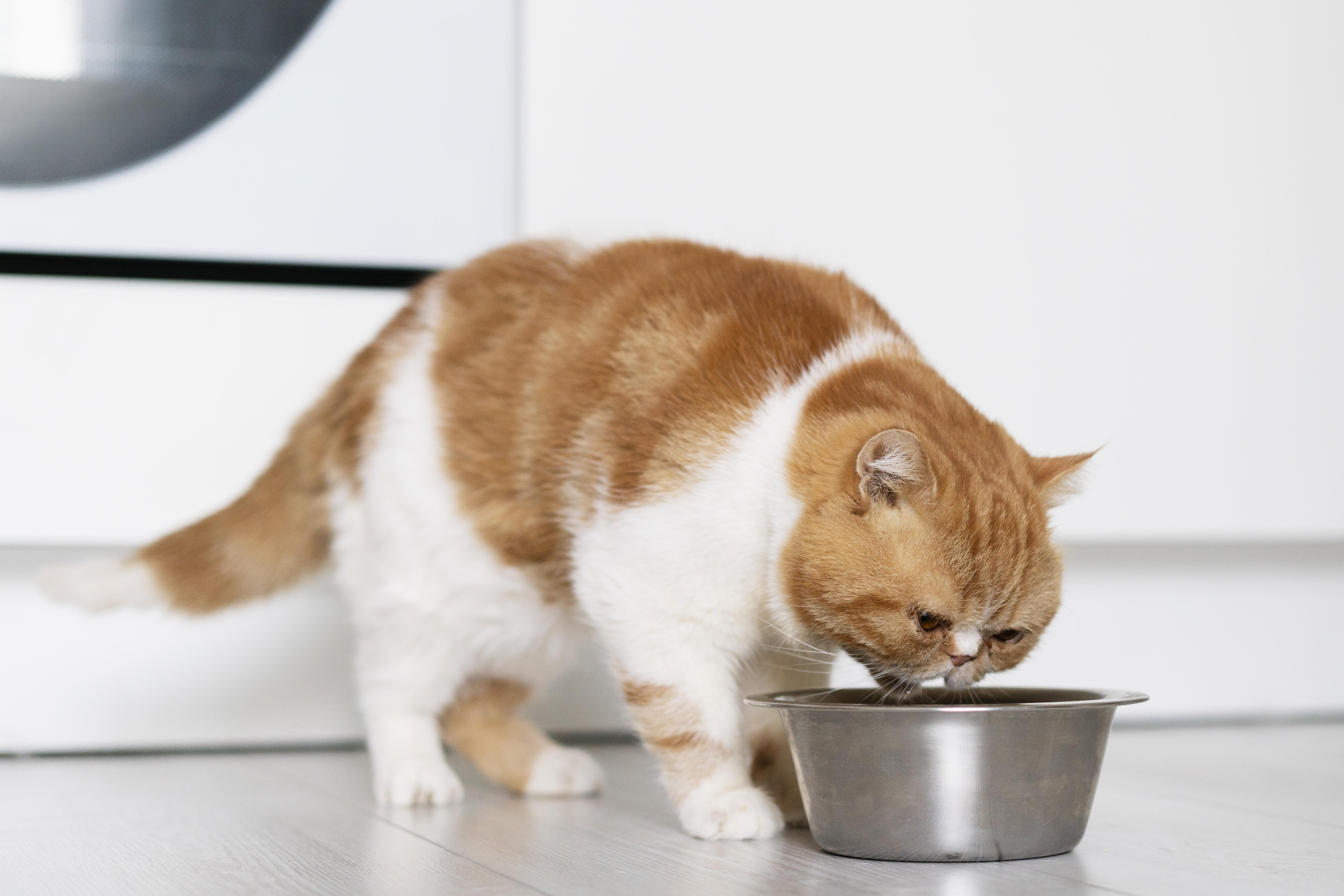
Choose wide, shallow bowls made of stainless steel or ceramic rather than deep plastic ones. Wide dishes are kinder to sensitive whiskers, and non porous materials keep the water tasting fresher for longer.
Consider a cat water fountain. Fountains keep water moving, which helps filter out impurities and adds fresh oxygen. The gentle sound and movement appeal to a cat's natural instinct that moving water is safe and clean.
Filter the tap water using a simple carbon filter jug, or fit a reverse osmosis system under the sink to remove chlorine and excess minerals before filling the bowl.
If your cat is a particularly stubborn drinker, try enhancing the flavour slightly. A tablespoon of plain, unsalted homemade chicken broth, or a splash of water from a tin of tuna packed in water with no added salt, can encourage more interest in the bowl.
Place several bowls or fountains around the house in quiet, low traffic spots, well away from litter trays and feeding areas. This way, no matter where your cat is resting, or which other pets happen to be nearby, fresh water is always within easy, stress free reach.
Finally, daily cleaning of bowls and fountains is just as important as the equipment itself. Bacteria, saliva residue and dust build up quickly, even in water that looks perfectly clear, and a slimy film can form on the inside of a bowl within a day or two. Washing bowls with warm water and mild soap every day, and giving fountains a thorough clean and filter change on the schedule recommended by the manufacturer, keeps the water genuinely fresh rather than merely topped up. A cat that senses staleness or a faint film on the surface may simply stop drinking, however well designed the bowl or fountain might be.
REFERENCES
- Gunn-Moore, D. A. (2003). Feline lower urinary tract disease. Journal of Feline Medicine and Surgery, 5(2), 133-138.
- Zoran, D. L. (2002). The carnivore connection to nutrition in cats. Journal of the American Veterinary Medical Association, 221(11), 1559-1567.
- Buckley, C. M. et al. (2011). Effect of dietary water intake on urinary output, specific gravity and relative supersaturation for calcium oxalate and struvite in the cat. British Journal of Nutrition, 106(S1), S128-S130.
- Hawthorne, A. J., & Markwell, P. J. (2004). Dietary sodium promotes increased water intake and urine volume in cats. The Journal of Nutrition, 134(8), 2128S-2129S.
- Buffington, C. A. T. (2011). Idiopathic cystitis in domestic cats—beyond the lower urinary tract. Journal of Veterinary Internal Medicine, 25(4), 784-796.
- Pachel, T. L., & Neilson, J. C. (2010). Evaluation of water consumption and preference in domestic cats offered water via fountain versus bowl. Journal of Veterinary Behavior, 5(1), 58.