Best Cat Food for Sensitive Stomachs: Raw and Fresh Options
17th Jul 2026
The best cat food for a sensitive stomach depends on your individual cat and the reason for their digestive upset. If your cat has repeated vomiting, loose stools or wind, see your vet before you change their food, because diet is only one possible cause. Once your vet has ruled out anything that needs treatment, the usual next step is to move gradually to a new cat food,
There isn't one recipe that suits every cat, so it's worth taking a considered approach rather than making several changes at once.
What does a sensitive stomach look like?
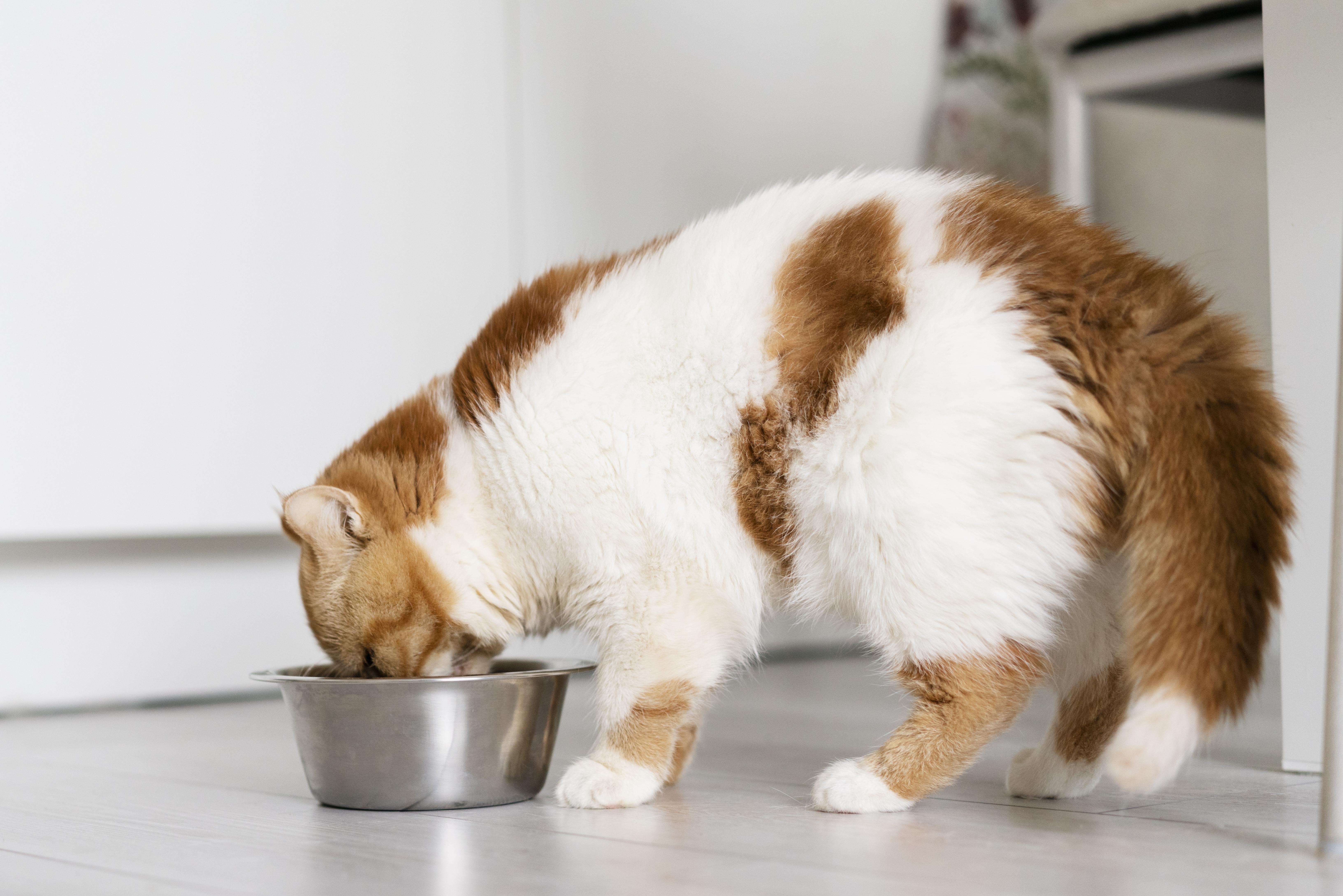
Most owners notice soft or loose stools, wind, vomiting or food coming back up, or a cat that goes off their food or seems unsettled after meals. Vomiting and regurgitation are not the same thing, and your vet will want to know which you are seeing; our guide to regurgitation and vomiting explains how to tell them apart.
What can cause a sensitive stomach in cats?
Possible factors include:
- Food sensitivities: some cats may react to particular ingredients or proteins. Your vet can advise whether a food allergy or intolerance needs investigating.
- Changes to their diet: switching food too quickly can upset a cat's digestion. Introducing a new recipe gradually gives you a more controlled way to make a change.
- An underlying health problem: ongoing vomiting, diarrhoea or other digestive changes can have medical causes that need veterinary attention.
- Individual dietary needs: cats have different nutritional requirements and feeding preferences. A recipe that suits one cat won't necessarily suit another.
Digestive symptoms can sometimes indicate a more serious underlying condition that needs prompt veterinary attention.
For example, research from the Royal Veterinary College examining 18,249 randomly sampled primary-care veterinary records for 2019 found that intestinal disease was the fourth most common for those cats. This shows how common stomach issues occur in cats, leading to them struggling with their food.
Similarly, researchers from the Institute of Veterinary, Animal, and Biomedical Sciences found that when they were diagnosing food sensitivity in cats using elimination-challenge studies, 29% of the cats studied who had chronic idiopathic gastrointestinal problems were diagnosed as food sensitive.
If you’ve noticed your cat has been experiencing food sensitivities, taking them to the vet to rule out any underlying or undiagnosed conditions can help you identify the most appropriate care and diet for your cat.
Recipes to start with
If your vet is happy for you to try a new food, below are single-protein recipes from our raw and fresh ranges, alongside trial packs offering a selection of recipes, which let you try one before committing to a full order. Choose one, give it time, and ask your vet if you are unsure.
|
Type |
Recipe |
What is in it |
|
Trial pack |
Choose two boxes from Mixed Box 1, Mixed Box 2, turkey, wild boar and pork, beef or chicken |
|
|
Trial pack |
Choose two boxes from rabbit, chicken and the two mixed boxes |
|
|
Trial pack |
Adult tub trial pack; kitten tub trial pack, 5 x 450g |
Rabbit; rabbit and ox heart; chicken; turkey; beef and chicken |
|
Fresh Deli |
50% turkey breast, 20% heart, 20% gizzard, 10% liver; 121 kcal per 100g |
|
|
Fresh Deli |
60% chicken breast, 20% heart, 10% gizzard, 10% liver; 114 kcal per 100g |
|
|
Fresh Deli |
70% beef trim, 20% ox heart, 10% ox liver; 121 kcal per 100g. A red-meat option if poultry has not suited; ask your vet |
|
|
Raw with bone |
Farmed Rabbit with Ground Bone (Adult), 450g tub or 6 x 70g pouches |
100% minced whole farmed rabbit including liver and kidney, with ground bone; 137 kcal per 100g; protein 19.4%, fat 7.2% |
|
Raw with bone |
Turkey and Ground Bone with Turkey Heart and Liver (Adult), 450g tub |
80% turkey with ground bone, 10% heart, 10% liver; 159 kcal per 100g |
|
Raw with bone |
Chicken with Ground Bone with Chicken Liver, Heart and Gizzard (Adult), 450g tub |
80% chicken with ground bone, 10% liver, 5% heart, 5% gizzard; 155 kcal per 100g |
|
5 Days Fresh |
60% chicken breast, 20% heart, 10% gizzard, 10% liver; 108 kcal per 100g |
|
|
5 Days Fresh |
50% turkey breast, 20% heart, 20% gizzard, 10% liver; 125 kcal per 100g |
What should you look for in cat food for a sensitive stomach?
Look for food that makes it easier to understand exactly what you're feeding your cat. A short, clearly listed ingredient list can be a useful starting point, particularly if you're trying to identify whether a particular protein or ingredient agrees with them.
1. A clear ingredient list
Knowing which ingredients are in your cat's food makes it easier to keep track of dietary changes. Look at the named meat and other ingredients rather than relying on a product description that simply promises to be suitable for sensitive stomachs.
Our recipes list their ingredients and percentages, so you can see what is included in each meal.
2. One protein to start with
If your cat's sensitive stomach is more of a dietary sensitivity, starting with one clearly defined recipe may make it easier to monitor how your cat responds.
Avoid introducing several new proteins or different foods at the same time. If a problem develops, multiple changes can make it harder to work out what might have contributed.
A suspected food allergy may require a specific dietary trial. Your vet should guide the choice of food and the length of that trial, rather than you attempting to diagnose an allergy through trial and error.
You can read more on our page on food allergies and novel protein diets.
3. A complete and balanced meal
A suitable food needs to provide the nutrients your cat requires, not simply contain meat. When comparing options, check that the product is labelled as a complete meal and is appropriate for your cat's life stage.
The recipes in the table above are labelled Complete Balanced Meal on their product pages. Always check the individual product information before choosing a recipe.
4. A change you can manage gradually
Even if you've found a promising recipe, avoid changing your cat's diet abruptly unless your vet advises otherwise. A gradual transition gives you time to monitor how your cat responds and helps make the change more manageable.
Our transition guide explains the process in more detail.
Is raw food good for cats with sensitive stomachs?
Feeding raw provides your cat with a high-protein diet, which is important to feline health because protein plays a key part in repairing and maintaining muscle tissue, provides energy and supports overall development and growth.
Taurine is an amino acid that is essential in a cat’s diet. They are unable to manufacture it themselves, and it is crucial for maintaining proper eye and heart function and has also been found to be important for growth, reproduction, hearing and immune response.
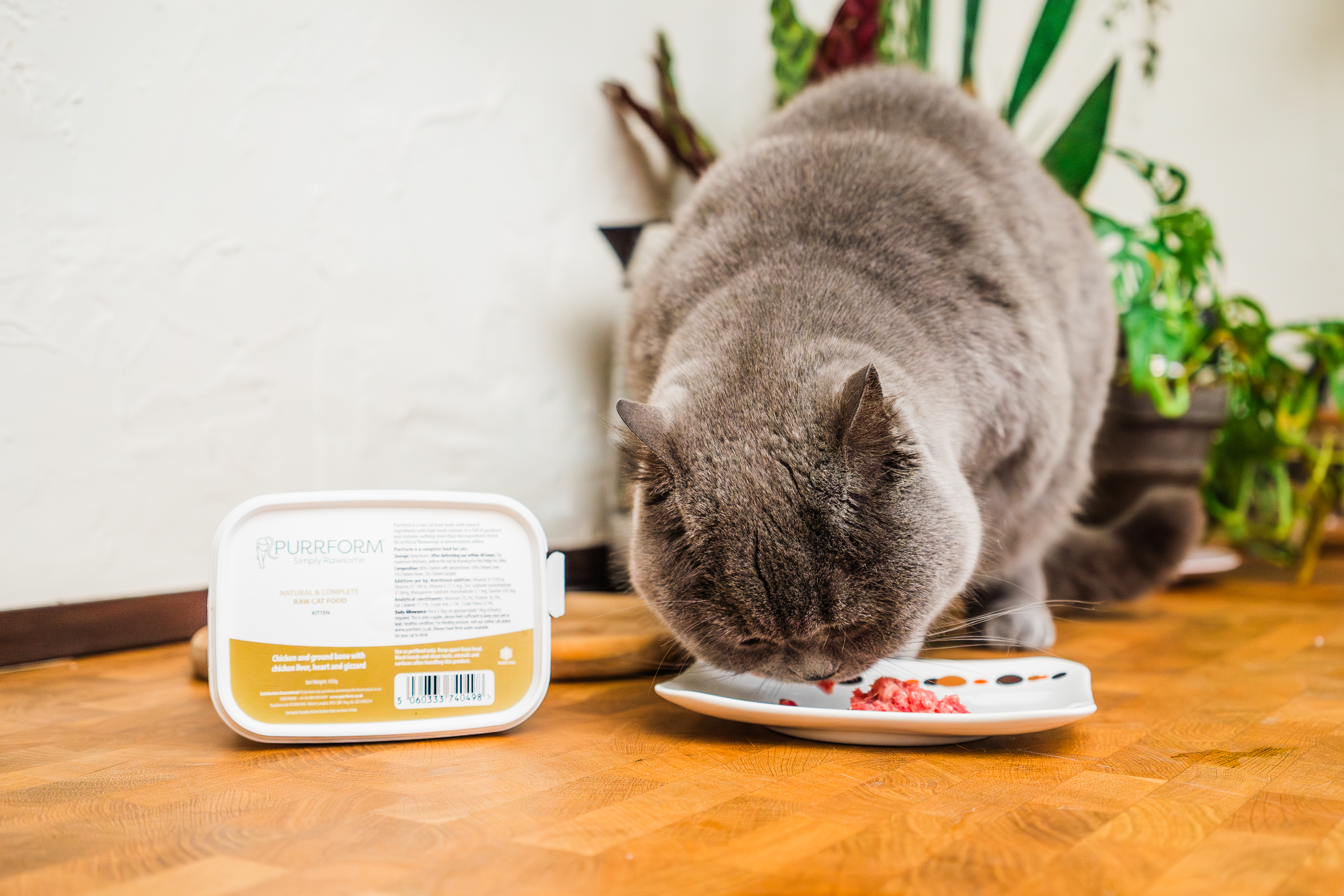
Our raw range includes recipes made with minced meat, offal and ground bone. Several recipes have a short ingredient list, so you can see which animal proteins and other ingredients are included.
For example, Farmed Rabbit with Ground Bone for adult cats contains minced whole farmed rabbit, including liver and kidney, with ground bone. Turkey and Ground Bone with Turkey Heart and Liver is another option, with turkey making up 80% of the recipe.
If you have concerns about salmonella, please read our guide to salmonella and raw feeding.
What if you don't want to feed raw food with bone?
If you'd prefer a bone-free recipe, we offer two alternatives: 5 Days Fresh and Fresh Deli.
5 Days Fresh: raw, bone-free cat food
Our 5 Days Fresh range is raw, bone-free food that has been high pressure processed. The 300g recipes include Chicken Breast with Heart, Gizzard and Liver, and Turkey Breast with Heart, Gizzard and Liver.
Both list their meat and offal clearly and contain no ground bone. They are still raw foods, so the same careful handling applies, and they can be warmed gently in a microwave on low settings for 10 to 15 seconds.
Fresh Deli: gently steamed cat food
Fresh Deli is a fresh cat food that offers gently steamed, complete meals in individual 70g pouches, sold in boxes of seven. The recipes include Turkey Breast with Heart, Gizzard and Liver; Chicken Breast with Heart, Gizzard and Liver; and Beef Trim with Ox Heart and Liver.
Each recipe has a published ingredient breakdown, making it easier to see what is included. The beef option may be worth discussing with your vet if poultry hasn't suited your cat, although a different protein isn't automatically the answer to a suspected sensitivity.
The main differences between these ranges are how the food is prepared, whether it contains bone, and how it is packaged.
Sensitive stomach FAQs
Can kittens with sensitive stomachs eat raw food?
We offer kitten-specific raw recipes, including Farmed Rabbit with Ground Bone and Turkey and Ground Bone. These are finely minced and made for kittens, but ongoing diarrhoea or other digestive symptoms should be discussed with a vet before you change their food. You can explore our kitten food range.
What food will settle a cat's stomach after being sick?
There isn't one food that can be recommended for every cat after vomiting. The right next step depends on what caused the vomiting and how your cat is doing. Contact your vet if the symptoms persist, and follow their advice on feeding and any dietary changes.
Is fresh cat food the same as raw cat food?
No. Our 5 Days Fresh range is raw, bone-free and high pressure processed. Our Fresh Deli range is gently steamed. Our raw tubs and pouches contain ground bone and should be defrosted and served without heating. Always follow the handling and feeding instructions for the specific product.
Can I mix new food with my cat's current food?
Yes, a gradual transition can involve mixing the new food with your cat's existing food, provided this is appropriate for the diet your vet has recommended. For wet food, our transition guidance starts with 10% of the new food and increases the proportion by 10% every two days. Adult cats may need two weeks or longer to transition. See the full transition guide for the schedule and further advice.
Also read..
Best Low calorie Cat Food