
Fresh vs Raw Cat Food
23rd Nov 2026
Fresh vs Raw Cat Food: What’s the Difference and Which Is Right for Your Cat?
Choosing what to feed your cat can feel overwhelming, particularly with so many different diets available. Fresh and raw cat food are two options that focus on quality ingredients and high levels of animal protein, but they take different approaches to preparing your cat’s meals.
At Purrform, we believe cats deserve food that meets their nutritional needs without unnecessary ingredients. Whether you’re considering our Fresh Deli range or exploring the benefits of raw feeding, understanding the differences can help you make an informed decision for your feline friend.
So, what separates fresh cat food from raw cat food? And how do you decide which is best for your cat?
What Is Fresh Cat Food?
In this article, ‘fresh cat food’ refers to gently cooked food that is frozen for storage and delivery. This preparation method offers an alternative to traditional processed pet food while retaining the flavour and moisture of a freshly prepared meal.
Purrform Fresh Deli is made with human-grade ingredients, including quality cuts of meat, and is gently steamed before being frozen. Developed alongside qualified veterinary nutritionists, the range provides complete and balanced nutrition for cats at all life stages.
Unlike many conventional pet foods, Fresh Deli focuses on recognisable ingredients, with no unnecessary fillers, added sugar, artificial flavourings or preservatives.
The Benefits of Fresh Cat Food
1. Gently cooked ingredients
The gentle cooking process distinguishes fresh food from raw alternatives. Cooking can reduce the presence of harmful microorganisms, although safe handling and storage remain important. For owners who prefer not to feed uncooked meat, fresh food offers a way to provide a meat-focused diet without serving it raw.
2. High moisture content
Cats naturally obtain much of their water from their food, so moisture content is an important consideration when choosing what goes into their bowl.
Purrform Fresh Deli contains approximately 70% moisture, contributing to your cat’s daily fluid intake. This can be particularly useful for cats that rarely visit their water bowl.
Adequate hydration supports normal bodily functions, including urinary tract health. However, cats with existing urinary or kidney conditions may need specific dietary advice from their vet.
3. High-quality protein
Protein supplies essential amino acids that cats need to maintain muscle, support growth and repair body tissues. As obligate carnivores, cats rely on nutrients found in animal-based ingredients to meet their dietary requirements.
Fresh Deli uses named, recognisable ingredients and is formulated to provide complete nutrition, helping owners understand what they are feeding their cats.
4. A practical alternative to raw feeding
Fresh food can be a suitable option for owners who want to feed a meat-rich diet but feel more comfortable with gently cooked ingredients.
It is also worth considering if you have concerns about handling raw meat in your home. Although fresh food still requires appropriate refrigeration, thawing and storage, the cooking process can reduce harmful microorganisms, although careful handling and storage are still essential.
What Is Raw Cat Food?
Raw cat food uses uncooked animal ingredients to provide nutrition that reflects the meat-based diet cats have evolved to eat.
In the wild, cats hunt small prey, consuming a combination of muscle meat, organs and other tissues. A carefully formulated raw diet aims to provide the nutrients cats need through an appropriate balance of ingredients.
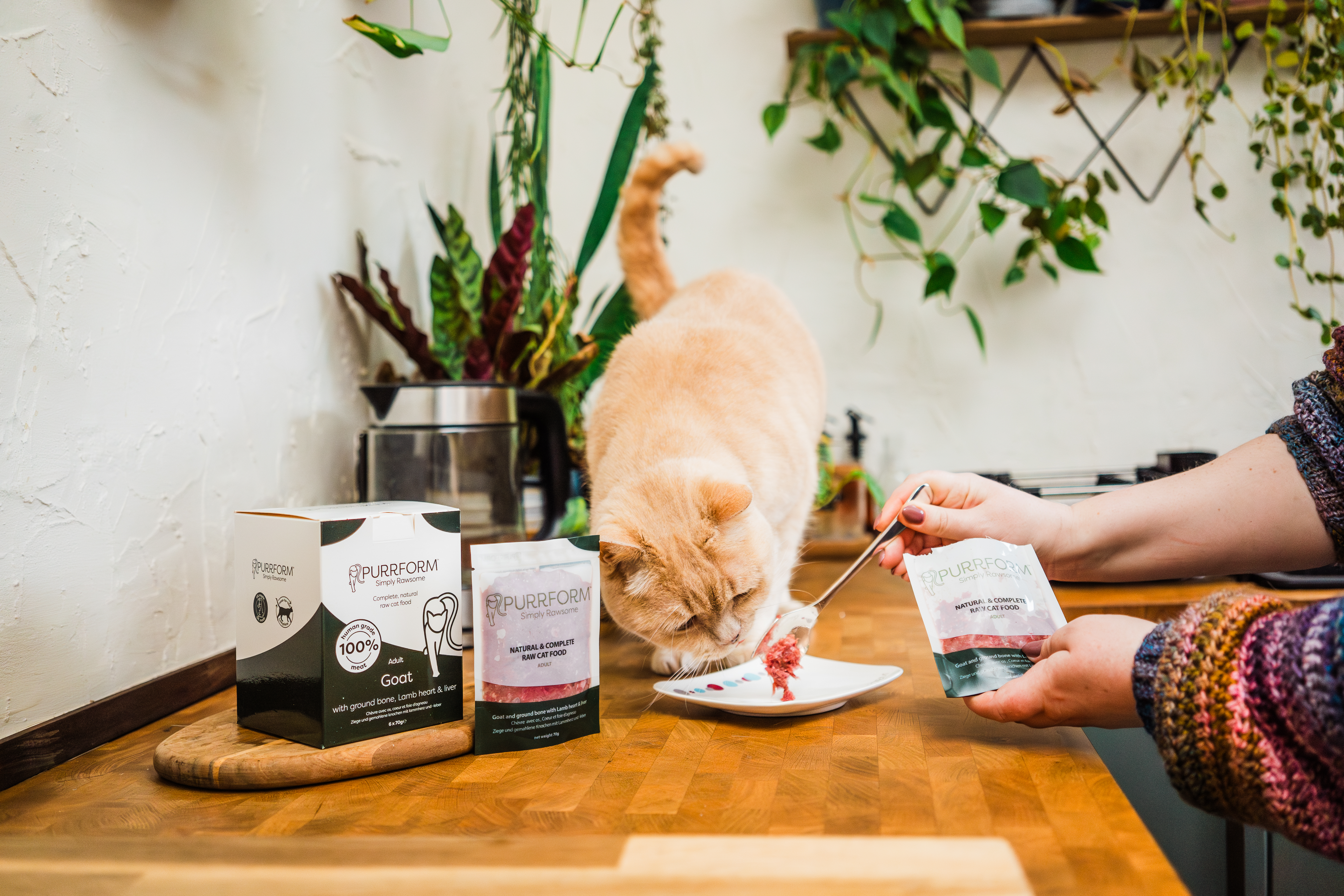
Purrform's complete raw cat food is available in a variety of recipes, offering different protein sources and combinations of meat, bone and offal. The range is designed to provide complete and balanced nutrition when fed according to the product guidance.
Raw food is typically frozen to maintain freshness during storage and transport, then thawed before serving.
The Benefits of Raw Cat Food
1. A meat-focused diet
Raw feeding places animal protein at the centre of your cat's meals. Protein supports muscle maintenance, growth and everyday activity, while animal-based ingredients provide essential nutrients such as taurine.
Taurine is particularly important for cats because they cannot produce enough of this amino acid themselves to meet their needs. A complete raw recipe must therefore supply the nutrients cats require, rather than relying on meat alone.
2. Variety of protein sources
Not every cat enjoys the same flavours. If your cat turns their nose up at chicken or seems uninterested in their usual food, trying a different protein source may help.
Purrform offers a range of raw recipes featuring different meats, giving owners options to explore their cat's preferences. Variety can also make mealtimes more interesting, provided each recipe is nutritionally complete and suitable for your cat.
3. Moisture from food
Like fresh food, raw food contains moisture that contributes to your cat's daily fluid intake. This can be helpful for cats that do not drink much water independently.
The exact moisture content varies between recipes, so check individual product information when comparing options.
4. Control over ingredients
Raw feeding allows you to select recipes based on their ingredients and nutritional composition. This can be useful if you're trying to identify which proteins your cat enjoys or need to avoid a particular ingredient.
If you suspect a food allergy, however, choosing a different flavour alone may not be enough. Speak to your vet about identifying the trigger and selecting an appropriate diet.
Fresh vs Raw Cat Food: What Are the Main Differences?
Although both approaches prioritise animal-based ingredients, there are some important differences to consider.
Preparation
The biggest distinction is how the food is prepared. Fresh Deli is gently steamed before freezing, while Purrform's raw recipes remain uncooked.
This means fresh food offers a cooked alternative for owners who prefer not to feed raw meat.
Texture and taste
Cooking can change the smell, texture and flavour of meat. As cats can be particular about these sensory qualities, some may prefer fresh food while others respond better to raw recipes.
There is no universal winner. Your cat's preferences, previous diet and willingness to try new foods will all influence which option works best.
Handling and storage
Both ranges are frozen for storage and need to be thawed appropriately before feeding. However, raw food requires particular care because uncooked meat can carry harmful bacteria that may affect people and animals.
Always follow the product's storage instructions, wash your hands thoroughly after handling food, and clean bowls, utensils and preparation surfaces carefully. Keep raw food away from human food during preparation and avoid leaving it out for extended periods.
Choosing the right option
Neither fresh nor raw food is automatically the best choice for every cat. The priority is to select a complete and balanced diet that meets your cat's nutritional requirements, suits their circumstances and can be handled safely in your home.
Both Purrform ranges offer options for owners looking to move beyond conventional feeding choices.
Can You Feed Your Cat Both Fresh and Raw Food?
Fresh and raw food do not necessarily have to be competing choices. Depending on your cat's needs and preferences, you may want to explore both options.
For example, you could find that your cat prefers fresh food as their everyday meal but enjoys a particular raw recipe, or that one preparation method is easier to manage around your household routine.
The important consideration is nutritional balance. If you're feeding different products, make sure their combined portions provide the nutrition your cat needs without exceeding their daily calorie requirements.
Both foods should be complete diets if they are intended to make up your cat's regular meals. Complementary foods, treats and unbalanced additions should not replace a complete diet.
When changing between recipes or preparation methods, introduce the new food gradually and monitor your cat's appetite, stools and general wellbeing. If your cat has a medical condition or requires a therapeutic diet, ask your vet before making changes.
How to Choose Between Fresh and Raw Cat Food
Still unsure which option to try? Start by considering your cat's individual needs and your own feeding preferences.
Fresh food may be a suitable choice if:
- You want a gently cooked, meat-focused diet.
- You prefer not to serve uncooked meat.
- Your cat enjoys the texture and flavour of cooked ingredients.
- You want a complete meal with a high moisture content.
Raw food may be a suitable choice if:
- You want to explore an uncooked, meat-based diet.
- Your cat enjoys the flavours and textures of raw recipes.
- You want to try different protein sources.
- You are comfortable following the additional hygiene precautions needed when handling raw meat.
Whichever option you choose, look for complete and balanced recipes, follow the manufacturer's feeding guidance and adjust portions to your cat's age, weight, activity level and body condition.
Kittens, adult cats and senior cats can have different nutritional needs. If you're unsure whether a particular food is appropriate, your vet can help you choose a suitable diet.
How to Transition Your Cat to Fresh or Raw Food
Cats can be cautious about changes to their food. A different smell, texture or temperature may be enough to put them off a new meal, even when the ingredients look appealing to you.
The best approach is to be patient and introduce changes gradually. Avoid suddenly replacing your cat's entire diet, as abrupt changes can cause digestive upset and may lead to food refusal.
Start by offering a small amount of the new food alongside their familiar diet, following the product's transition guidance. Gradually increase the new food as your cat becomes comfortable with it, adjusting the pace if they struggle to accept the change.
You should also serve food at the recommended temperature and follow the storage instructions on the packaging.
For more detailed advice, read Purrform's Transitioning Guide. It explains how to introduce Purrform raw food, including guidance for cats currently eating wet food, dry food or another raw diet.
Remember that every cat is different. Some settle into a new routine quickly, while others need considerably longer. If your cat stops eating, develops persistent digestive symptoms or seems unwell, seek veterinary advice rather than continuing to push the transition.
Discover the Right Food for Your Cat with Purrform
Fresh and raw cat food both offer alternatives to conventional feeding, with an emphasis on animal-based ingredients, protein, and moisture. The main difference lies in preparation: fresh food is gently cooked, while raw food remains uncooked.
At Purrform, our Fresh Deli and raw ranges give you different ways to explore a meat-focused diet, with complete recipes designed to support your cat's nutritional needs.
Explore our Fresh Deli range or discover our raw cat food range to find recipes your cat might love. With the right food, a gradual transition, and a little patience, you can build a feeding routine that works for both of you.